
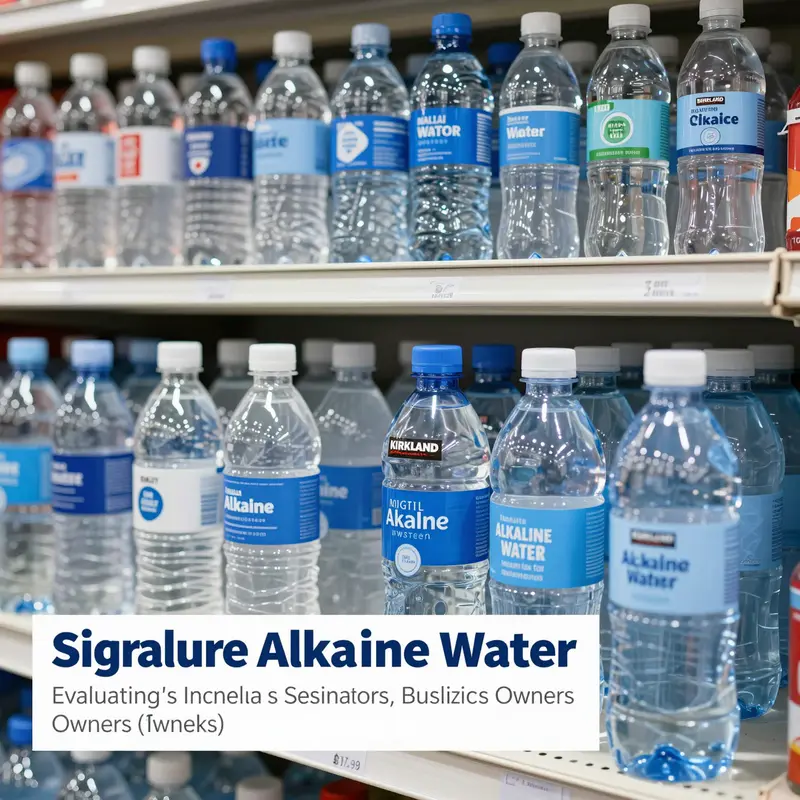
As more consumers turn to bottled water, products like Costco’s Kirkland Signature Alkaline Water have garnered attention in the market. Amid recent health warnings associated with certain alkaline water brands, understanding the implications for business owners is critical. This article dives into the essential aspects of Costco’s alkaline water—from health risks and consumer reactions to taste assessments and valuable price comparisons. Moreover, we explore scientific insights on alkaline water consumption, equipping business owners with a well-rounded perspective that informs both sourcing decisions and consumer engagement strategies.
Costco Alkaline Water Unpacked: Value, Claims, and the Science Behind Hydration Hype
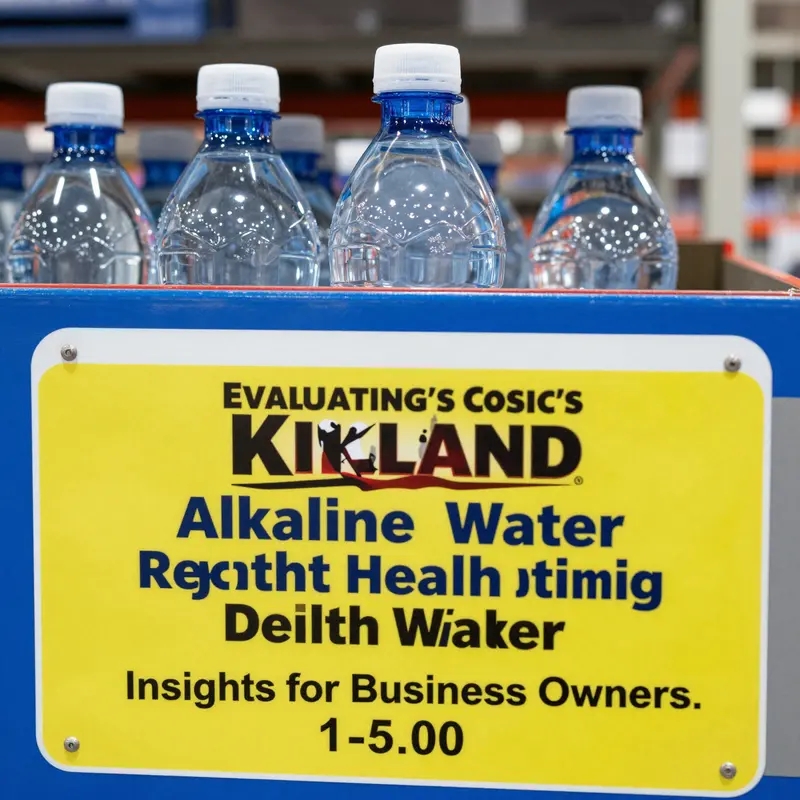
Costco’s private-label alkaline water has carved out a curious space in the beverage aisle. On the surface, it looks like a straightforward, affordable option for those who want a smooth, clean-tasting water with a claim of added alkalinity. Critics, however, point out that the science behind alkalinity as a disease-preventive or health-enhancing solution remains unsettled. In the row of bottles that line the shelves, price and perception often outpace measured benefit, and the same shopper who praises the price may pause at questions about whether pH manipulation truly changes health outcomes. The debate is not all or nothing, though. Many customers report favorable taste and hydration experiences, and the product’s cost advantage remains a persuasive selling point in a market crowded with premium bottled waters. The chapter that follows threads these experiences with the broader medical and regulatory context to offer a grounded, practical reading of what this water actually delivers.
At the heart of the discussion lies a simple, stubborn question: does drinking alkaline water meaningfully alter one’s health? The body’s acid-base balance is tightly regulated by the lungs and kidneys. A normal diet and regular hydration do not leave the body “over-acidified” in a way that drinking water could counteract. This is not a fringe claim but a consensus repeatedly emphasized by major health authorities. The idea that a beverage can tilt systemic pH in a way that meaningfully shifts health outcomes tends to overpromise and underdeliver. Yet the market keeps pushing the message that alkaline water is hydration with added health punch. Costco’s branded version capitalizes on this perception—appealing to cost-conscious consumers who equate value with perceived purity and a smoother palate—while wrapping the product in a narrative of wellness. The result is a product that sits at the intersection of marketing insight and consumer longing for tangible benefit from everyday choices.
From a nutritional science perspective, the promise of alkaline water hinges on more than just pH. The sensation of “tastier” or “softer” water can be a function of mineral content and carbonation level, rather than an actual health amplification. A rigorous evaluation of health claims is challenging because the physiological systems involved—gastric acid secretion, mineral balance, and hydration dynamics—are complex and individually variable. In fact, a growing body of reputable work, including reviews in the American Journal of Clinical Nutrition, concludes that there is currently no reliable evidence that alkaline water meaningfully improves health or prevents disease. The same literature cautions against assuming benefit from alkalinity without considering the broader context of lifestyle, diet, sleep, and physical activity. This sober scientific frame is essential whenever a product markets itself with terms like “enhanced hydration” or “neutralizing body acidity.”
It is important to separate the Costco private label from higher-profile warnings that have captured public attention. Earlier this year, health authorities issued urgent advisories about a different brand of alkaline bottled water sold widely, including at big-box retailers. While that warning pertained to a distinct product with its own quality and safety concerns, the episode underscores a crucial point for consumers: not all alkaline waters are created equal, and regulatory guidance can shift rapidly as new information emerges. The FDA’s guidance on acid-base balance emphasizes that the body maintains tight control over pH, and that external sipping with high-alkaline content does not automatically translate into health gains. In other words, even as some brands ride the wave of wellness marketing, official sources remain clear about the limits of alkaline water’s purported benefits. The Costco offering thus sits in a nuanced space where value, taste, and price compete with scientific realism and cautious consumer expectations.
Taste and value play pivotal roles in shaping consumer judgments. Many shoppers appreciate the clean profile attributed to Costco’s alkaline water and compare it to premium bottled waters that carry steeper price tags. The appeal of a private-label option is not just the lower cost; it is the trust that a well-known retailer’s store-brand can deliver predictable quality. Yet the broader conversation about alkaline water remains polarized. Some users continue to total up cups and bottles as part of a daily ritual, while others scrutinize the claim of alkalinity as a marketing layer that may not deliver tangible outcomes. This tension—between subjective experience and objective science—drives consumer discussions in stores, online reviews, and word-of-mouth chatter. To navigate it wisely, shoppers should consider their own health context and focus on consistent hydration with plain water as a baseline, complemented by a balanced diet and healthy lifestyle habits.
For readers seeking a wider angle beyond taste and price, one helpful touchstone is to look at the beverage ecosystem around Costco’s private-labels. A broader look at Costco’s food and beverage offerings reveals how store-brand products, including bottled beverages, are positioned to provide practical options that emphasize value without sacrificing basic quality. If you want a quick primer on how Costco frames its beverage lineup, the Costco Food overview is a useful starting point: Costco Food. This context helps explain why an alkaline water option might be attractive to many shoppers and how the retailer balances budget concerns with consumer expectations regarding taste and reliability. It is not about endorsing one health claim over another but about understanding how retail strategy intersects with consumer choices.
As the dialogue around alkaline water continues to evolve, readers are reminded to anchor decisions in credible information. Individual responses to alkaline water can vary, and the science is clear about the limits of what high pH can accomplish in isolation. If health concerns arise or questions about hydration persist, consulting a healthcare professional remains the prudent course. Meanwhile, staying informed through reputable sources and recognizing marketing signals can help prevent overreliance on a single product for health gains. In the end, Costco’s alkaline water serves as a case study in how a private-label beverage can command attention through price and palate while inviting ongoing scrutiny from science and regulation.
External resource: https://www.fda.gov/consumers/consumer-updates/acid-base-balance-and-health
Costco Alkaline Water Review: Taste, Truth, and Value in a Lab-Tested Market
Costco’s house-brand alkaline water often enters the conversation as both a practical everyday purchase and a case study in how a retailer’s water story can diverge from the science of what makes water truly alkaline. In the evolving landscape of bottled water, taste and price can blur into marketing narratives, making it essential to separate sensation from substance. Recent independent observations—including a widely circulated TikTok post—challenged the very labeling of a popular store-brand alkaline water by presenting a measured reality that did not align with the marketing claim. The test reported a pH around 6.0 and a total alkalinity near zero, a combination that runs counter to the standard definition of alkaline water. These results matter not as a sensational headline but as a prompt to examine how water is sourced, treated, and labeled in a retail setting. For readers who care about value without surrendering scientific clarity, this chapter sits at the intersection of sensory perception and objective composition, a place where price competitiveness and product transparency must align to earn long-term trust.
Water sources and the production process form a critical backdrop to any flavor and chemistry discussion. In this case, the water is described as treated municipal supply, which is common in large-scale bottling operations. Municipal water is generally neutral or slightly acidic by default, and the journey to a “filtered, alkalized” end product often hinges on a last-step mineral addition intended to impart a perceived alkaline character. The distinction between artificial mineral fortification and a genuinely mineral-rich, naturally alkaline source is subtle but meaningful. Experts caution that while minerals can improve taste and provide trace elements, they do not necessarily replicate the health implications associated with alkaline water from a natural or intentionally balanced source. The end result can therefore be a product that tastes clean and refreshing while diverging from the chemical profile one might expect from a bottle sold as “alkaline.” The consumer message here is not merely about labeling, but about transparency in the water’s actual mineral content, pH history, and how those numbers are measured.
Consumer feedback on taste and overall quality illustrates the tension between affordability and confidence in product claims. A notable proportion of buyers welcome the price point, especially when they perceive the taste as smooth and crisp—qualities that can rival more expensive brands. Yet the testing data and the water’s source backdrop frame those impressions with caveats. If the pH is not consistently elevated and the total alkalinity is minimal, the sensory experience could still be pleasant, but the product is not delivering what its marketing promises about alkaline chemistry. This divergence helps explain why some reviews are glowing on mouthfeel while others press for stricter labeling and more complete water-quality data, such as mineral breakdowns, conductivity, and actual alkaline benchmarks. The reality for many shoppers is a mixed verdict: a favorable palate and a favorable price that sit against a backdrop of scientific scrutiny and a demand for greater provenance in the labeling.
Beyond the immediate price-and-talette analysis, there is a broader health conversation anchored in global guidance. While the controversy around a particular brand has drawn attention, major health bodies continue to emphasize that the health benefits of alkaline water are not universally proven and that long-term consumption of excessively alkaline water could carry risks. This nuance matters for consumers who routinely select alkaline options with the expectation of health advantages. It reinforces the importance of reading water-quality reports—beyond catchy claims—and of recognizing that a product’s mineral fortification can shape taste and pH without necessarily conferring the broad health benefits some marketers imply. In this context, it becomes prudent to differentiate the Costco water’s actual chemistry from the broader narrative of alkaline beverages, and to treat each label as a data point rather than a blanket health endorsement.
For readers looking to broaden their frame of reference on Kirkland-brand products and how the retailer communicates quality across categories, a related review of another Kirkland product line can illuminate the brand’s consistency in labeling and consumer messaging. See the Kirkland Organic Milk Review for a representative example of how the brand presents its ingredients, sourcing claims, and value proposition across staples. This cross-category lens helps readers assess whether the retailer’s water-related claims align with how it communicates quality elsewhere in its catalog. Kirkland Organic Milk Review
In sum, the Costco alkaline water narrative is not a simple verdict of “good” or “bad.” It is a case study in how taste, price, provenance, and scientific validation intersect in a crowded marketplace. The most reliable takeaway for consumers is to approach alkaline claims with a critical eye: request the full water-quality report, scrutinize mineral content alongside pH, and consider whether the level of alkalinity matches personal health goals. If a product’s labeling is sparse on mineral specifics, price remains an appealing signal, but it should not substitute for transparency. And while a low-cost bottle may satisfy a craving for a clean, easy-to-drink water, informed buyers will balance palate with provenance. The objective remains clear: value is meaningful only when it travels with clarity about what is in the bottle and why it matters. For those who want a broader sense of how Kirkland communicates product quality, follow-up exploration into other brand reviews can be instructive in recognizing patterns of labeling and value across categories. External research and user-generated testing continue to shape a more nuanced understanding of what constitutes true alkalinity in bottled water, beyond the marketing banner.
External reference: https://www.tiktok.com/@realdealreview/video/739456789012345678
Costco Alkaline Water Review: Unpacking Price, Taste, and the Value Equation
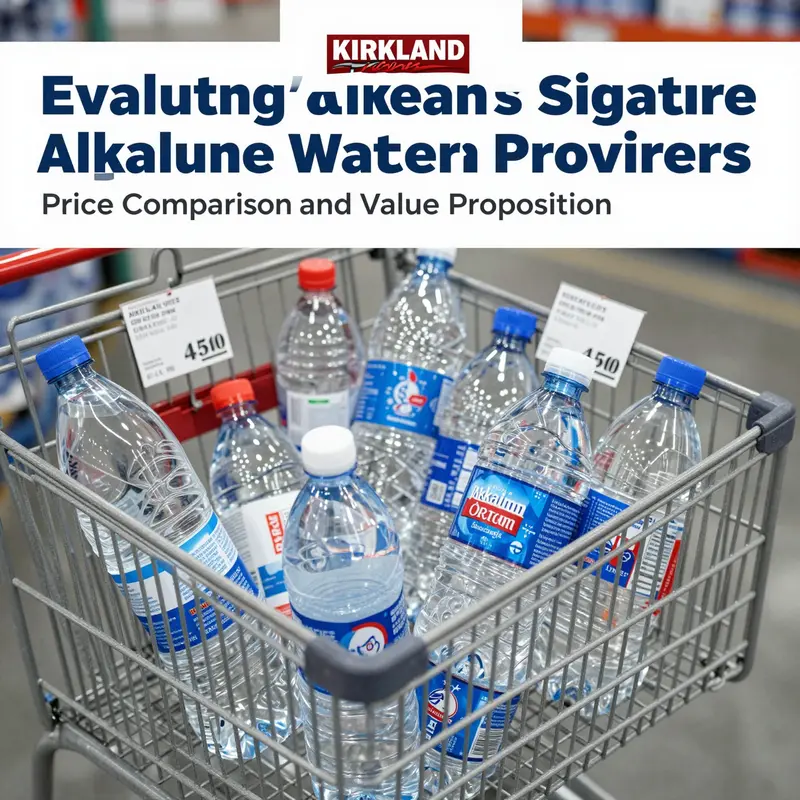
Costco’s private-label alkaline water sits at an intriguing crossroads of affordability and health marketing. In markets saturated with premium bottles and wellness claims, this Costco offering has built a reputation for being one of the most economical choices that still promises a smooth, soft mouthfeel. The narrative around it is not simply about hydration; it’s about a deliberate value proposition that trades proximity to science for accessibility and price. On one hand, many consumers praise the water for tasting clean and feeling easy to drink, aligning with the idea that “soft” water is more palatable for daily use. On the other hand, critics remind readers that the science behind alkaline claims is complex and sometimes contested, and that cost alone does not guarantee health benefits. The juxtaposition is at the heart of this review: a low price that makes alkaline water feel almost mainstream, even as health authorities urge cautious interpretation of the claim that higher pH equates to better health.
From a price perspective, the Costco option is remarkably compelling. Reports from early 2025 consistently highlight a strikingly low price point: a 24-bottle pack can retail for roughly 14.9 yuan, depending on location and promotions. That translates to about 0.6 yuan per bottle, a level of affordability that few competing brands at the same scale can match. When juxtaposed with earlier imports linked to the Kirkland Signature line, which could run into tens of yuan per bottle, the domestic version represents a dramatic price compression. The result is a straightforward value story: for shoppers who want “alkaline” water without the premium markup, Costco’s private label delivers, at volume, a very competitive total cost of hydration.
The core value proposition rests on more than just price. The water is marketed as a “weakly alkaline” product, which implies a higher pH than standard bottled water while maintaining the ease of drinking common to many soft, mineral-balanced waters. In practice, this positioning translates into a drinking experience described by some as smooth or soft on the palate—an important differentiator in a crowded category where texture and mouthfeel can influence repeat purchases as much as pH labels. The added reassurance for budget-conscious shoppers often comes in the form of a satisfaction guarantee: a full refund if the product fails to meet expectations. That guarantee nudges hesitant consumers toward trial, reinforcing a perception of risk mitigation that compounds the overall value proposition.
Yet the value equation does not exist in a vacuum. The broader science surrounding alkaline water remains nuanced. While a higher pH can offer a gentler taste and, in some contexts, a perceived reduction in acidity, long-term health implications remain debated. The World Health Organization has noted that long-term consumption of water with excessively high alkalinity can have adverse effects on certain individuals, underscoring the point that “alkaline” is not a universal salvation but a condition with limits. In parallel, a recent social-media test from a TikTok user-put to the test by an informal consumer experiment—pH measurements on a bottle labeled as alkaline—was reported to yield a reading around 6.0, suggesting a weaker alkalinity than claimed by marketing. While such videos should be interpreted with caution, they feed into a broader cautionary thread: price and taste do not automatically validate health claims. The Costco option, therefore, occupies a space where affordability meets a marketing narrative that invites scrutiny rather than blind trust.
A practical way to navigate this space is to separate brand narratives from labeling. The water in Costco’s line is described as treated and lightly mineralized, rather than a naturally mineral-rich source. The minerals cited—calcium and magnesium, among others—contribute to taste and possibly to trace mineral content, but they do not transform the product into a premium mineral water with a guaranteed mineral profile. For consumers, this means that the decision to buy hinges on three factors: budget, taste preference, and how one interprets the health claims associated with alkaline water. If taste and cost are the dominant drivers, Costco’s offering checks those boxes. If health claims and long-term risk are the primary concerns, readers should consult authoritative guidance and consider the label’s stated pH alongside individual health considerations.
To place this in the broader Costco ecosystem, the private-label strategy is a familiar rhythm: high-volume, low-margin products designed to reinforce loyalty and drive overall basket size. For readers interested in the quality dimension of Costco’s private-label portfolio, a comparative glance at other Kirkland reviews—such as the Kirkland Signature Organic Milk Review—offers a consistent thread: Costco leans into value-driven narratives across categories, even as each product carries its own set of caveats and consumer sensitivities. A practical, reader-friendly way to explore these patterns is to view Costco’s private-label performance through a single, representative lens while keeping in mind that individual product experiences can vary by batch, region, and time of purchase. For those curious to delve deeper into Costco’s broader private-label strategy, one can examine related product reviews through internal costco content such as the Kirkland Signature Organic Milk Review.
In summary, the Costco alkaline water presents a persuasive value proposition for price-sensitive buyers who also want a somewhat alkaline drinking experience. It excels on cost efficiency and user-perceived smoothness, with a strong refund guarantee that lowers purchase hesitation. However, the science around alkaline claims remains unsettled, and consumers should read labels critically, consider personal health implications, and stay alert to regulatory and health authority guidance. If you are evaluating whether this water fits into your daily routine, the decision is anchored most firmly in price and taste, with health claims framed as optional considerations rather than guarantees. For readers who want to explore related Costco private-label dynamics, see the Kirkland Signature Organic Milk Review linked above. External resources offer further context about the ongoing debates in the alkaline-water space and the FDA’s public warnings on non-Costco brands; for an official health alert on Real Water and its regulatory status, see the external resource at the end of this chapter.
External resource: https://www.fda.gov/news-events/press-announcements/fda-warns-consumers-not-drink-real-water-alkaline-water
Questioning the Label: A Scientific Look at Costco’s Store-Brand Alkaline Water
Readers often encounter store-brand claims that a bottle is alkaline, suggesting health benefits beyond ordinary hydration. In practice, the science behind alkaline claims is not as clear-cut as marketing might imply. This chapter follows a careful, science-informed throughline about Costco’s store-brand alkaline water, highlighting what independent testing has found, how pH works in the human body, and what consumers should realistically expect from such products in the market today. The discussion treats the topic with both caution and curiosity, acknowledging consumer interest in taste, price, and perceived wellness while staying rooted in physiological realities and evidence-based interpretation.
Independent testing conducted in early 2025 revealed a striking discrepancy between the alkaline label and the actual pH of the beverage in question. Using standard pH testing strips, the sample registered a pH of about 6.0, which classifies it as weakly acidic rather than alkaline. A corroborating report in the following month echoed the same finding, noting that the measured pH did not approach the commonly marketed alkaline range and did not exceed 7.0 at all. In other words, the product most shoppers encounter as an alkaline option did not meet the basic criterion its label promises. This kind of discrepancy matters because pH is a statement about the water’s acidity or basicity, not a direct prescription for health outcomes. The data, while unsettling to some, should be interpreted within the larger framework of how the human body manages acid-base balance and what water can and cannot do in that system.
To understand why a bottle’s pH matters and why it often does not translate into systemic effects, it helps to ground the discussion in physiology. The body maintains tight control over the acid-base balance of blood, keeping a narrow window around pH 7.35 to 7.45. This regulation occurs through buffering systems, respiration, and kidney function. In this context, drinking water—even water that is labeled and marketed as alkaline—has limited capacity to move the body’s overall pH in any lasting or meaningful way. Water that rises the pH of the bottle due to mineral additions or ionization can alter the water’s immediate chemistry and taste, but it does not automatically rewire the body’s complex regulatory machinery. The distinction between altering a beverage’s pH and changing systemic pH is essential for readers to grasp. Alkalinity marketed to consumers is often achieved through minerals like bicarbonates, which change the water’s pH in isolation but do not produce a predictable, health-enhancing shift inside the body. This nuance is frequently lost in promotional language that promises “acid-base balance” benefits through hydration alone.
The broader conversation about alkaline water also touches the question of what, if anything, is gained by regular consumption. The scientific consensus to date does not provide robust evidence that drinking alkaline water materially improves health markers for the general population. While some brands may advertise minerals or ionization as a pathway to wellness, the body’s regulatory systems are designed to maintain homeostasis across a wide range of dietary intakes. When guidance comes from major health authorities, it tends toward caution about using alkaline water as a universal health strategy. The World Health Organization has noted concerns about very high alkalinity over the long term, suggesting that the health advantages claimed by some products are not universally supported and may even carry unknown risks when used outside tested contexts. In this light, choosing a water based on taste, safety, and price—rather than marketing claims about acid-base balance—appears to be a prudent approach for most shoppers.
Within this framework, consumer perception plays a powerful role. Many people report that the store-brand option has a clean and crisp taste that reminds them of more premium bottled waters. Price, of course, matters, and the retailer’s house-brand water often undercuts other bottled offerings while delivering familiar mineral hints from the addition of small amounts of calcium and magnesium. Some drinkers prize the perceived smooth mouthfeel that mineral content can confer, while others prefer waters with less mineral load for a lighter, more neutral palate. Taste is subjective and can be influenced by the source water, bottling process, and even the caps used, but it is not a stand-alone measure of health impact. In other words, even when a consumer enjoys the taste and is drawn by a favorable price, those factors do not validate or invalidate the scientific questions surrounding alkalinity and health.
For readers who are curious about how this product sits within the wider beverage landscape, it is worthwhile to consider related experiences within the same brand family. A broader look at the retailer’s beverage portfolio offers context about how marketing languages frame hydration, wellness, and value. For a practical reference on how a retailer’s beverage products are analyzed in terms of taste, texture, and formulation, see this broader review context: Sports Drink Review.
If readers are weighing the decision to experiment with alkaline-styled waters, the balancing act remains straightforward. First, verify the label and the actual water chemistry if possible; second, consider the intended purpose—maintenance of hydration versus pursuit of health benefits that are not strongly supported by evidence; and third, value the comfort of taste and the consistency of quality. For those who value minerals, seek naturally mineral-rich sources or spring waters where the mineral profile is transparent and part of the water’s identity. The central takeaway is not to reject concerns about taste or value, but to align expectations with scientific nuance: a water’s pH is a property of the liquid itself, not a universal gateway to improved health. Consumers should approach alkaline claims with critical thinking, ensuring that their choices are guided by safety, taste, and credible information rather than marketing phrases.
External resource: https://www.tiktok.com/@healthylivingtrends/video/7382461987218479878
Final thoughts
In summary, Costco’s Kirkland Signature Alkaline Water presents a mix of promising consumer feedback and serious health considerations. While its taste and cost-effectiveness appeal to many, the recent health warnings serve as a critical reminder to prioritize safety and make informed purchasing choices. business owners should remain vigilant, educating consumers on the risks and benefits associated with alkaline water products. As this market continues to evolve, staying informed will be essential for making strategic business decisions in the beverage space.