
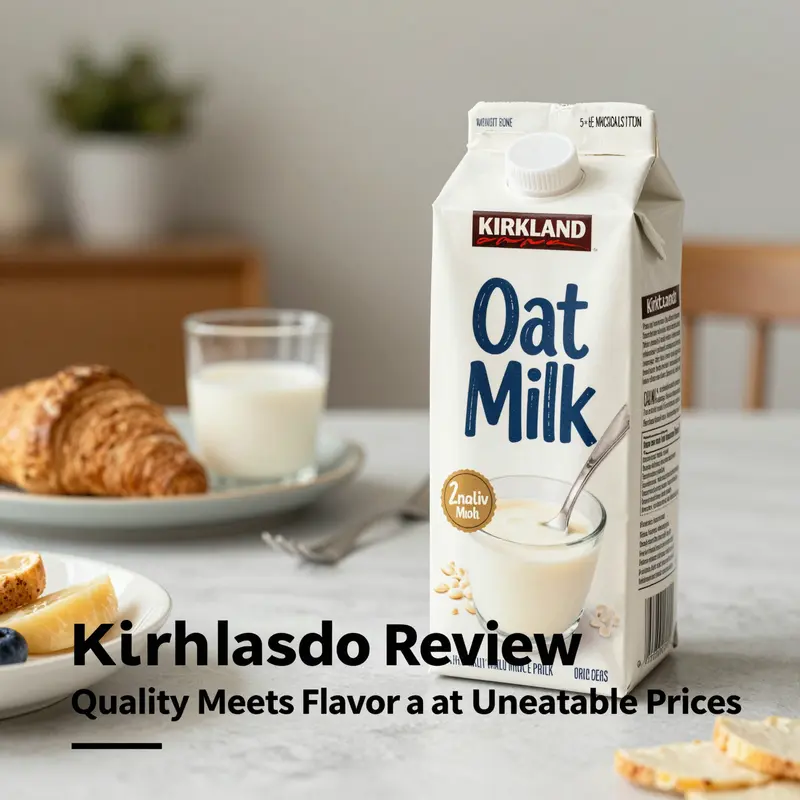
Kirkland Signature Oat Milk has emerged as a formidable contender in the plant-based milk market, gaining significant attention from consumers and businesses alike. As more individuals seek lactose-free and plant-based alternatives, understanding the intricacies of what makes Kirkland oat milk a preferred choice is essential. This review delves into its flavor profile, the quality control standards behind its production, and the reception from consumers to highlight how it positions itself not only as an affordable option but also as a high-quality product. Each chapter aims to provide a comprehensive understanding of these aspects, informing business owners about product offerings that could satisfy their customer base effectively.
Flavor Without Friction: Costco Private-Label Oat Beverage’s Taste, Texture, and Trust
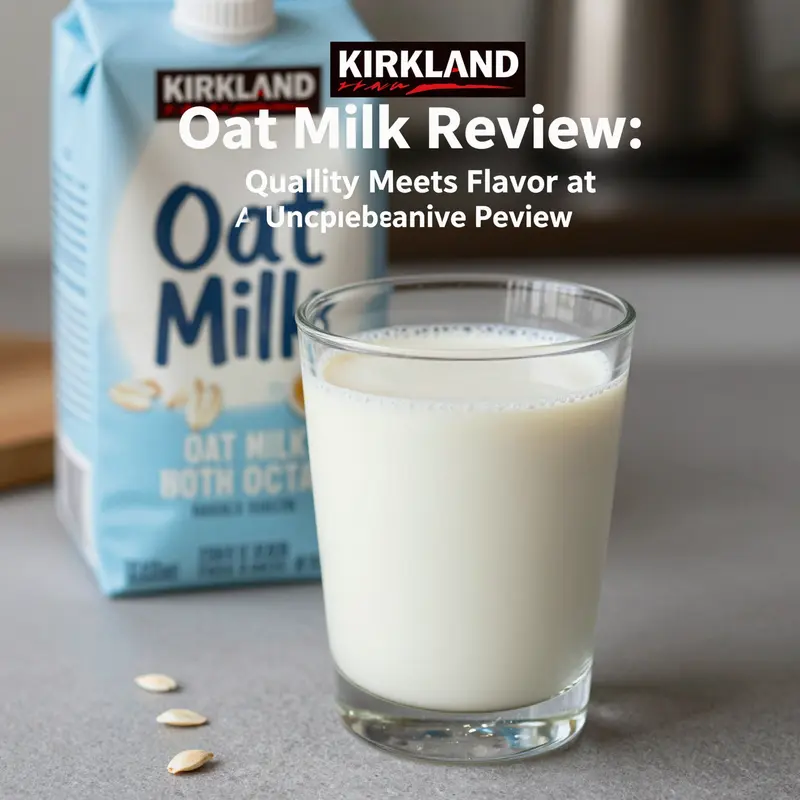
Flavor in plant-based milks is a moving target. It shifts with sweetness, mouthfeel, and how the liquid interacts with coffee, cereal, or simply sipping. When a store-brand oat beverage aims to compete with premium lines that have spent years refining their profile, it faces a higher bar for balance. This chapter surveys what readers experience when they pour this oat beverage into coffee, tea, or cereal, and why that experience tends to lean toward approachable, dependable, and cost-conscious without sacrificing the sensory satisfaction that people seek in a non-dairy milk.
Creaminess without heaviness is a widely noted trait in this product. The oat base delivers enough body to support a latte or cappuccino while staying bright enough to avoid masking the bean’s character. Baristas report a crema that holds shape and a milk that blends smoothly with espresso. Home brewers note similar behavior, with texture that helps a cup feel indulgent yet clean.
Sweetness is present but restrained. The natural sweetness aligns with the oat backbone and does not shout flavoring. It allows the beans’ notes to come through, whether bright and fruity or deep and chocolatey. The result is a balanced cup that cooperates with different roasts and brew methods.
Fortification signals health-minded value without turning the milk into a nutrition-first claim. Calcium and vitamin D fortification are visible on the label and read as practical choices for daily routines.
From a quality-control perspective, the private-label brand emphasizes consistent testing and supplier oversight. A belt-and-suspenders approach with regular microbiological checks helps ensure a stable flavor profile across lots.
Price and value dictate everyday use. The value proposition is clear: the oat beverage delivers credible flavor and performance at a price point that supports daily consumption, foam stability for lattes, and compatibility with a busy kitchen.
Readily adaptable, the product works with pour-over, espresso, or cereal, inviting curious shoppers to experiment without fear of overpowering flavors. This versatility underpins its appeal to both home kitchens and small cafes.
Ultimately, the combination of a friendly taste, reliable mouthfeel, health-forward fortification, and consistent production makes this store-brand oat beverage a practical everyday option that aligns with modern eating patterns and budget-conscious routines.
From Farm to Cup: The Rigorous Quality Control That Shapes Kirkland Oat Milk
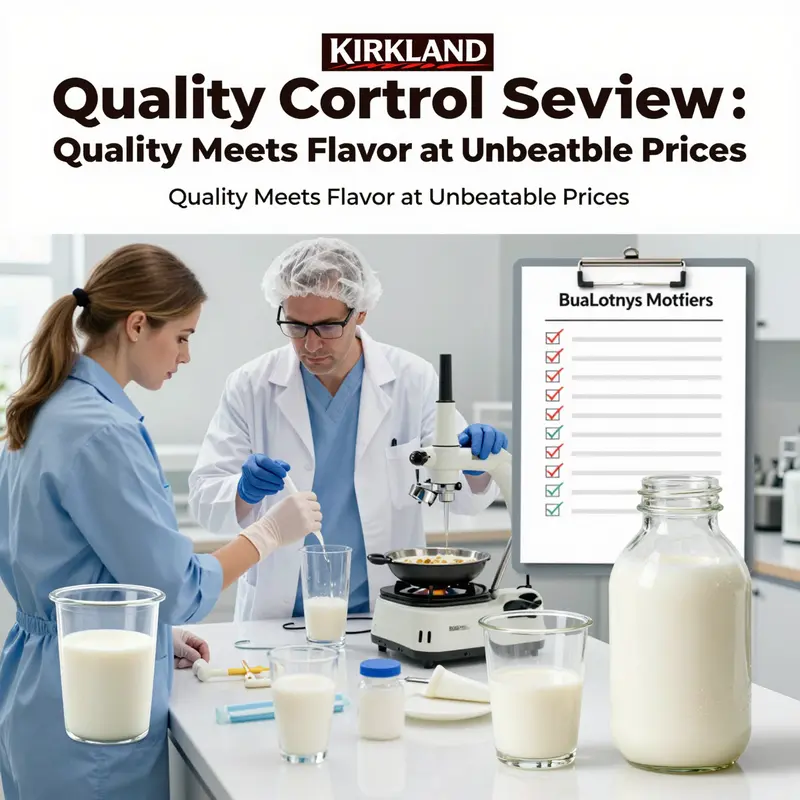
In the quiet cadence of a grocery aisle, a bottle of Kirkland oat milk might look unassuming. Yet its value proposition rests on a complex, carefully choreographed system of quality control that begins long before the oats ever meet water. This chapter peels back the routine details that keep the product safe, fresh, and consistently capable of delivering a reliable sensory profile—a profile that has won over budget-minded shoppers and coffee lovers alike. The essence of Kirkland’s oat milk quality rests not on marketing bravado but on a disciplined pipeline that binds supplier discipline, laboratory rigor, and chain-of-custody practices into a seamless guarantee. Consumers taste the result in their morning coffee, in their bowls, and in the simple satisfaction of knowing the beverage will behave the same way in every grocery cart. The underlying truth is straightforward: a cost-effective private-label beverage can achieve high endurance and real flavor alignment when its quality gates are sturdy, transparent, and relentlessly applied.
A core pillar of this system is the supplier audit mechanism. Costco’s approach to its Kirkland line, including the oat beverage, hinges on annual surprise inspections of the production partners. Sometimes inspections occur more frequently, driven by risk indicators or previous audit findings. The auditing framework rests on the Food Safety and Quality Auditing Guidelines, which demand that suppliers achieve zero major deficiencies. If a supplier’s score slips below 85 percent, the policy requires a re-audit within sixty days, with the cost borne by the supplier. This creates a measurable consequence for underperformance and elevates the importance of continuous improvement across the supply chain. The practical upshot is that each batch of oat milk is produced under conditions that have already passed a rigorously enforced benchmark, reducing the chance of surprises in the consumer experience and signaling a quiet, but powerful, commitment to integrity.
In practice, the testing regime for oat milk mirrors the broader discipline of dairy and plant-based beverages, even if specific tests differ. While the publicly disclosed details may not enumerate every test, the logic is clear: a robust safety net sits between raw ingredients and the bottle on the shelf. Microbiological screening is conducted at multiple stages—from the oat base and water inputs to the finished beverage. Tests focus on detecting contamination that could compromise safety or flavor. In addition, the composition of the formula is validated through rigorous ingredient analyses. Oats, water, stabilizers, sweeteners, and fortifiers must align with declared specifications, and any deviation prompts corrective action before a product reaches consumers. This multi-layered scrutiny helps preserve the characteristic sweetness and creamy mouthfeel that define a satisfying oat milk experience. It also guards against batch-to-batch variability that can creep in when supply chains are stretched by weather, harvest cycles, or sourcing challenges.
Traceability is the invisible backbone that turns testing and audits into practical accountability. Each batch of Kirkland oat milk is assigned a unique lot identifier that registers the exact oat source, water parameters, processing timestamps, ingredient lot numbers, and packaging line data. This level of traceability makes recalls targeted and swift, limiting disruption to consumers and retailers alike. But it goes beyond recall readiness. The system actively supports operational resilience: temperature monitoring during transport, monitoring of processing equipment for wear or drift, and alerts when a formulation tweak is introduced. Such visibility enables managers to detect issues early and to verify that any corrective actions yield consistent outcomes in subsequent batches. In a market where a single small change in a stabilizer or processing sequence could subtly shift texture, the ability to trace, analyze, and adjust provides a strong safeguard against unintended consequences.
Costco’s quality standards extend beyond the minimum regulatory requirements. The philosophy is to treat quality as an ongoing, proactive discipline rather than a reactive shield. This is evident in how water quality, packaging materials, and storage conditions are monitored with greater intensity than the legal baseline would require. Elevated water testing ensures the base used for formulation is consistently within tight specifications, reducing the risk of off-flavors or mineral-driven texture changes. Packaging material compatibility tests safeguard against interactions that could degrade flavor or aroma over time, particularly in a product that must endure varied storage environments from home refrigerators to commercial coolers. The storage environment itself—humidity, temperature spikes, and even light exposure—is scrutinized because these factors can influence shelf life and sensory stability. When these elements converge, the resulting oat milk is less prone to drift, an advantage for both households and coffee shops that rely on repeatable performance.
The quality assurance framework also embraces a dynamic loop with consumer feedback. Private-label programs thrive when they can translate shopper experiences into concrete process improvements. Kirkland’s oat milk is no exception. Feedback pathways—ranging from membership platforms to social media conversations—offer real-world signals about sweetness balance, texture, and perceived freshness. Importantly, this input is not treated as anecdote but as data points that can drive incremental enhancements in production parameters and packaging design. If a latte texture in a café reveals a too-thick mouthfeel or a sweetness level that feels uneven, those observations can prompt calibrated adjustments in emulsifier choices, stabilizer concentrations, or even the distribution of sugar and flavor compounds. The result is a beverage that remains faithful to its core identity while evolving in response to how shoppers actually use and enjoy it. In the end, the process is not about chasing novelty but about maintaining a stable sensory baseline that supports trust year after year.
The practical consequences of such governance emerge in the everyday encounter with the product. For many consumers, the Kirkland oat milk that graces a café beverage or a kitchen shelf carries a sense of predictability that rivals more premium brands. A latte brewed at Moore Coffee in Seattle, cited by observers of the broader oat-milk landscape, demonstrated a rich, smooth texture with a balanced sweetness that did not veer toward cloying. This outcome underscores how quality control translates into tangible performance: consistency in texture, a dependable sweetness profile, and the ability to emulsify smoothly with coffee without separation or off-notes. For home users, this reliability manifests as a beverage that behaves well in cereal bowls, smoothies, and iced drinks alike. The market context rewards such predictability, especially when price competition is intense and consumer attention spans are short. The net effect is a product that delivers value—an efficient combination of affordability and taste—without sacrificing safety or consistency.
A further layer of credibility comes from recognizing how Kirkland’s approach aligns with broader industry practices while still embodying Costco’s distinctive emphasis on private-label stewardship. The company’s stated standards, as reflected in its public quality governance resources, point to a framework where suppliers are held to rigorous expectations, and where any deviation triggers requalification processes. This alignment is particularly meaningful for oat milk, a category where consumer confidence hinges on both safety and a clean, dependable flavor. When shoppers encounter a budget-friendly option that tastes like a premium product, it signals that the behind-the-scenes gates are not merely ceremonial; they are actively shaping every bottle. The effect, in practical terms, is an oat milk that can stand up to the scrutiny of coffee experts and casual tasters alike, a rare combination that supports both everyday use and occasional indulgence.
For readers who want to explore the broader narrative of Kirkland’s quality governance beyond oat milk, the Kirkland Organic Milk Review offers a complementary perspective on how Costco applies its private-label discipline across dairy and plant-based categories. This reference underscores a consistent philosophy: high value does not require compromise on safety, traceability, or sensory integrity. The same ethos that keeps a dairy beverage steady over time—careful supplier selection, rigorous testing, and a transparent chain of custody—applies to oat milk as part of a holistic quality system that governs nearly all Kirkland products. Kirkland Organic Milk Review.
In sum, the quiet work of quality control in Kirkland oat milk is the backbone of its market position. It anchors the product in safety, sustains flavor fidelity, and lends trust that transcends price. The supplier audits, microbiological and ingredient testing, and full traceability create a spine of integrity that supports repeatable experiences across diverse contexts—from a home kitchen to a busy cafe. Its emphasis on continuous improvement, driven by consumer feedback and reinforced by governance standards that go beyond regulatory expectations, ensures that the beverage remains a dependable choice for a broad audience. This reliability—paired with a price point that appeals to value seekers—helps explain why the Kirkland oat milk narrative has resonated with urban professionals and health-conscious shoppers who demand not just taste but assurance. For readers seeking deeper background on Costco’s quality standards, see the official guidelines: https://www.costco.com/corporate/quality-standards.html.
Value, Flavor, and Trust: Costco’s Oat Milk Redefines Budget-Friendly Plant-Based Luxury
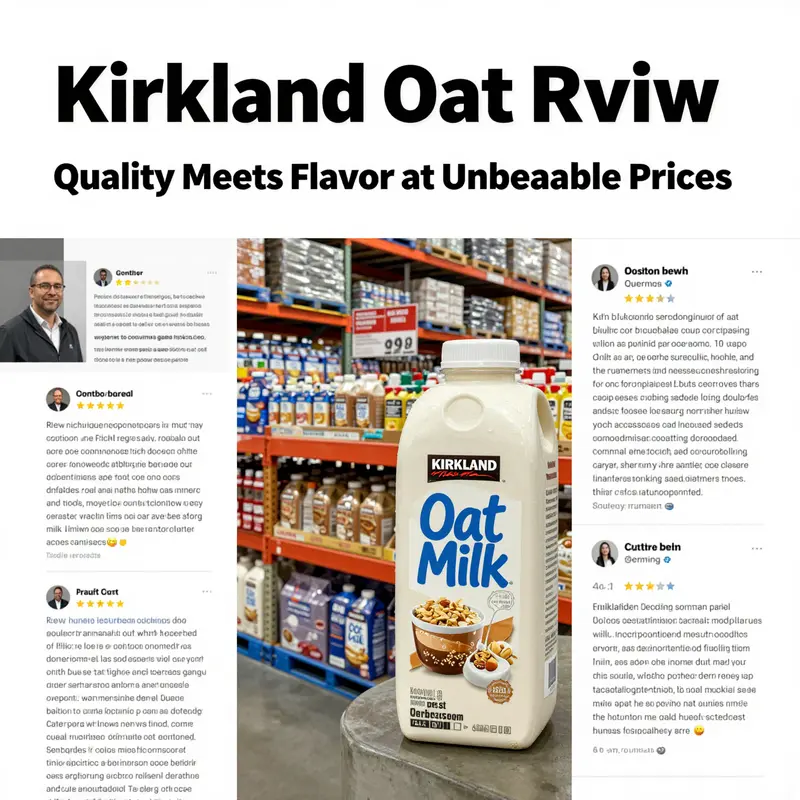
The rise of a private-label oat beverage tucked inside the warehouse aisles marks a quiet but meaningful shift in how consumers understand value in the plant-based category. This chapter follows that shift, tracing how a cost-conscious household staple has managed to combine taste, texture, and reliability in a way that challenges the traditional premium narrative. What begins as a straightforward, everyday purchase—an oat milk designed to be affordable and broadly available—has grown into a signal about how modern shoppers evaluate quality, transparency, and performance in a crowded market. Across households and cafes alike, this product has threaded together affordability and trust into a narrative that feels less about chasing the latest trend and more about sustaining a dependable standard over time. In that sense, its market position is less a flash in the pan and more a deliberate case of brand alignment with consumer expectations around value and ethics.
The economics behind this oat beverage are instructive. In a category long defined by premium pricing and glossy packaging, the private-label option has carved out a compelling value proposition. Price competitiveness—often several dollars less per carton than well-known specialty brands—meets a surprisingly consistent quality floor. Customers report flavors that land squarely in the middle ground: clean ingredients, a mild sweetness, and a texture that avoids the cloying aftertaste that can haunt lesser formulations. This balance is not accidental. It is the result of a deliberate production approach aimed at delivering dependable results across a wide array of uses—from coffee to bowls to baking. The affordability does not dilute the experience; rather, it expands access to a plant-based option for people who are exploring dairy-free living without wanting to compromise on everyday enjoyment. In practice, this translates into a product that households can stock without the usual friction of price spikes or flavor compromises, a crucial factor for repeat purchases in a busy household pantry.
Taste and mouthfeel emerge as the most frequently cited touchpoints in consumer conversations. The oat base is described as clean and neutral, with a sweetness profile that many readers would label as approachable rather than pronounced. This neutrality serves a practical purpose beyond mere flavor preference. It makes the beverage a reliable partner for coffee, cereals, smoothies, and baking, where dramatic sweetness or odd aftertastes can derail a recipe. The latte experience is particularly telling. In many cafes and home kitchens, customers report that the beverage foams well, steams smoothly, and holds its texture without curdling—a key factor for baristas managing busy orders and for home users seeking a consistent café-like result. Those observations echo broader sentiment within the category: when a plant-based milk performs in coffee, it often wins loyalty, not merely a one-off experience. The result is a product that proves its worth in the most demanding real-world contexts, where the stakes include both flavor perception and barista workflow.
This practicality aligns with a larger acknowledgment among consumers that quality control and supply chain reliability matter as much as flavor. The private-label approach brings with it a reputation for consistency rooted in Costco’s broader quality assurance framework. Even though the details of dairy-grade operations are distinct from plant-based lines, the underlying discipline is transferable. Suppliers in this space are subjected to rigorous oversight—surprise inspections, stringent deficiency thresholds, and extensive product testing—designed to reduce variability and ensure safety across a broad portfolio. This control ethos resonates with shoppers who value transparency and predictability in a sector where product quality can be uneven across brands. The implication is that the oat beverage does not merely ride a price-driven impulse; it benefits from a reputation mechanism that shoppers associate with trusted retail environments and well-managed private-label programs. A quick touchpoint for readers who want to connect brand claims with a tangible review culture is the Kirkland Organic Milk Review, which mirrors the larger confidence shoppers place in Costco’s private-label ecosystem. See Kirkland Organic Milk Review for a sense of how Costco’s private-label quality narratives are reinforced across product lines.
In terms of market dynamics, the oat milk category continues to grow as more consumers seek plant-based options for health, environmental, and ethical reasons. The demand trend benefits weaker price points only when coupled with credible quality signals. Costco’s distribution network and membership model provide a powerful mechanism for achieving economies of scale, which translates into competitive pricing without sacrificing quality. The result is a product that does not require premium branding to attract attention; instead, it leverages a combination of broad accessibility and a trusted retail environment to reach both budget-minded shoppers and time-strapped professionals who value reliable plant-based options. This positioning helps explain why the product has become a staple in many households and increasingly common in offices and small eateries that want dependable plant-based options without the friction of premium pricing.
From a consumer-reception perspective, reviews across major platforms consistently highlight performance in coffee and cooking contexts. The product’s ability to steam and foam without breaking the breakfast routine or ruining a recipe is repeatedly cited as a differentiator, even when compared against more expensive, trendier brands. This perception matters because it reframes what shoppers consider “worth paying for” in a plant-based beverage. If the goal is to satisfy a coffee ritual or baking project without a flavor mismatch or texture inconsistency, this oat milk appears to fulfill that promise consistently. The result is a broader appeal that extends beyond the health-conscious segment to urban professionals who want a versatile, reliable staple that fits into complex routines. The value proposition expands accordingly—from a mere cost saver to a trusted partner in daily life.
Transparency also plays a meaningful role in shaping consumer trust. Shoppers today scrutinize ingredient lists and processing details with more care than in the past. A product that avoids artificial flavors and unnecessary preservatives tends to gain extra credit in households that track what they put into daily meals. This alignment with transparent sourcing and simplified ingredients speaks directly to a consumer mindset that favors clarity over sensational claims. In a market where many products trade on a quick, glossy pitch, the oat beverage’s unpretentious formulation feels like a quiet, credible choice. The brand narrative that accompanies this product emphasizes straightforward ingredients and predictable performance, properties that are especially valued in households juggling picky eaters, dietary restrictions, or simply a desire for less grocery anxiety. That credibility reinforces the product’s long-term market position, which is less about chasing novelty and more about delivering dependable results week after week.
The broader market context also helps explain why this product stands out in a crowded field. The oat beverage enters a space with notable players and rising competition, including other private-label options and premium brands that invest heavily in flavor experiments and sustainability storytelling. Yet the combination of price, texture, and culinary versatility grants it a unique edge. The brand’s strategy leans into mainstream adoption—making oat milk a standard pantry item rather than a niche health product. Demographics align with this strategy: the 25–44 age group, a cohort often balancing budgetary discipline with a desire for ethical consumption, represents a sizable share of oat milk growth. This alignment translates into a virtuous circle where accessibility drives trial, trial drives familiarity, and familiarity sustains frequent repurchase. The result is a product that not only adapts to consumer needs but also helps shape those needs by lowering the barrier to entry for plant-based living.
In the long arc of the category, sustainability considerations carry increasing weight for shoppers and retailers alike. Plant-based beverages are often framed as a lighter environmental option, though the full impact varies by sourcing, processing, and packaging. The oat beverage brand in question has positioned itself in a way that reinforces this narrative: it leans into clean labeling, avoids unnecessary additives, and aligns with a broader sustainability agenda that mirrors Costco’s corporate goals. Consumers who care about ecological footprints see not just a price-friendly option but a product that participates in a broader conversation about responsible consumption. That alignment amplifies the product’s appeal beyond taste and price, turning everyday shopping into a choice with ethical resonance. The net effect is a product that feels reliable, practical, and thoughtfully produced—a potent combination that helps explain its growing market presence.
This narrative of value, flavor, and trust is not static. It evolves as supplier relationships mature and consumer expectations shift. The sourcing and production ecosystem for oat beverages has become more sophisticated, with suppliers navigating the realities of scale, quality assurance, and regulatory compliance. A recent industry synthesis highlights how private-label and branded players can collaborate to meet rising demand while maintaining rigorous quality standards. The practical implication for shoppers is that the oat milk they reach for on a typical grocery run is part of a broader system designed to deliver consistency, safety, and value across a range of private-label products. This systemic strength lends confidence to repeat customers and helps generate positive word-of-mouth that extends beyond traditional grocery channels into cafes, bakeries, and small eateries—spaces where the real test of a beverage often happens: does it perform consistently when used in professional or semi-professional settings?
As the category broadens, curiosity about future iterations also grows. Shoppers wonder whether the current formula will see refinements that further improve creaminess, taste neutrality, or environmental performance. Will new packaging innovations reduce waste, or will enhancements in processing open up additional culinary applications? The beauty of a market-positioned private-label option is that it can adapt incrementally while preserving the core elements that earned trust in the first place: dependable flavor, reliable texture, and a price that makes daily plant-based choices practical for millions of households. That adaptability is what keeps this product relevant as consumer tastes evolve and as competitors respond with their own innovations. The result is a living, dynamic category where a simple, affordable oat beverage becomes a reference point for what many shoppers now expect from everyday plant-based options.
For readers seeking a broader frame, this chapter also nods to how market intelligence and sourcing practices shape what ends up on the shelf. The private-label strategy thrives when it can combine strong supplier oversight with clear consumer messaging about ingredient quality and process integrity. In the oat milk space, that means combining straightforward ingredients with dependable sensory performance, all while ensuring accessibility. It means building a narrative that resonates across different shopping contexts—home, work, and public spaces—where the product must perform reliably under varying conditions. This chapter has traced how such a narrative translates into actual consumer behavior, showing why a budget-friendly oat beverage can become a staple rather than a mere option in a growing plant-based repertoire.
To connect the thread of practical experience with wider market dynamics, consider the everyday context in which this product enters households. It is not just about a carton on a shelf; it is about compatibility with routine meals, coffee rituals, and weekend baking experiments. It is about the confidence that comes from consistent results, week after week. It is about how a brand named for value and broad accessibility can earn a place in cups, bowls, and recipes that define a family’s weekly rhythm. In this sense, the product speaks to a broader cultural moment: the normalization of plant-based options as mainstream, reliable, and affordable enough to be part of ordinary life rather than exceptional experimentation. This is where the market position hardens into a lasting presence, where word-of-mouth and routine purchases reinforce the idea that high-quality plant-based options do not have to be expensive and hard to find.
External context is helpful for those who want to place these observations within the larger supply-chain and retail strategy conversation. The ongoing evolution of oat-based dairy alternatives is closely tied to supplier networks, manufacturing innovations, and the economics of scale that private-label programs uniquely leverage. For readers who seek a deeper dive into sourcing dynamics that underpin not just beverages but other oat-based retail innovations, a recent industry report offers a comprehensive look at supplier insights and best practices in this space. External resource: Strategic Sourcing of Oat Milk Ice Cream for Retail Brands: Supplier Insights and Operational Best Practices.
In sum, the Costco oat milk embodies a convergence of three core strengths: affordability that does not shortchange experience, a flavor and texture profile that accommodates varied uses from coffee to dessert, and a brand ecosystem that emphasizes transparency and quality control. It is a product that has earned a place in both private-label confidence and everyday kitchen practice. For shoppers who want to understand how a value-oriented option can compete with premium alternatives on taste, performance, and reliability, this oat beverage offers a persuasive case study. It demonstrates that price sensitivity and taste fidelity are not mutually exclusive in the plant-based category and that a well-managed private-label program can deliver the kind of consistency that builds lasting trust across a diverse consumer base.
Final thoughts
In summary, Kirkland Oat Milk stands out not just for its competitive pricing but for its superior quality and flavor that compete with high-end brands. Through rigorous quality control measures and a commitment to consumer satisfaction, it has established a strong market presence. For business owners, offering Kirkland Oat Milk could satisfy the increasing demand for quality plant-based products, making it a smart addition to your inventory. Its appealing flavor and reputation for excellence ensure that it resonates with a wide range of consumers seeking nutritious alternatives.