
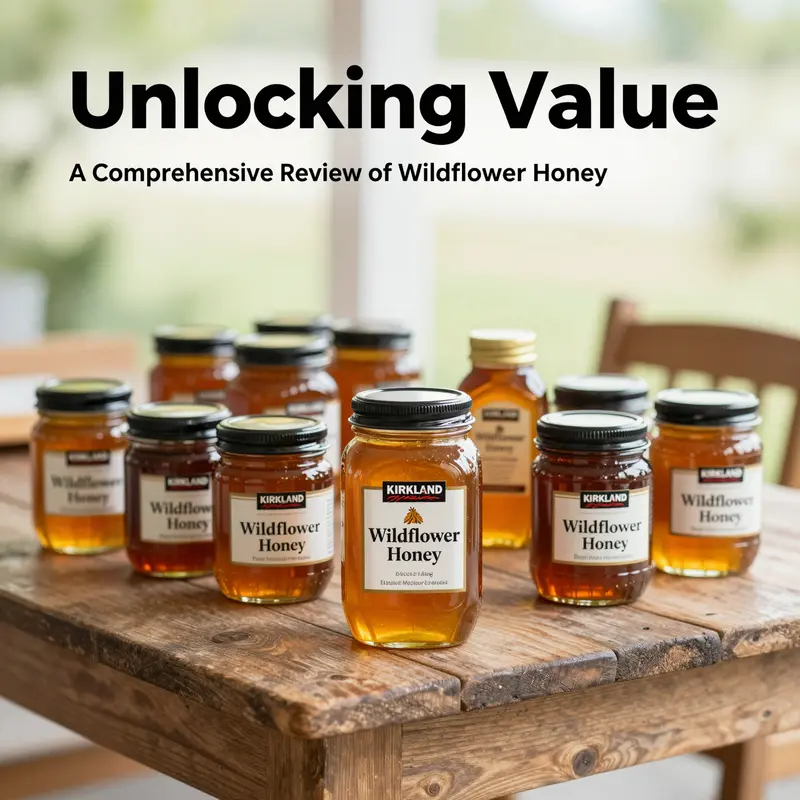
Kirkland Signature Wildflower Honey has emerged as a top contender in the honey market, especially for business owners seeking cost-effective solutions. Not only does it offer exceptional quality, but it also stands out for its appealing pricing. In this review, we will delve into three critical aspects: the product’s pricing and value, the quality and sourcing of its ingredients, and feedback from taste tests and consumers. By the end of this exploration, you’ll have a clearer understanding of whether Kirkland Wildflower Honey is the right choice for your business.
Private-Label Wildflower Honey: Price, Purity, and Practical Value Unpacked
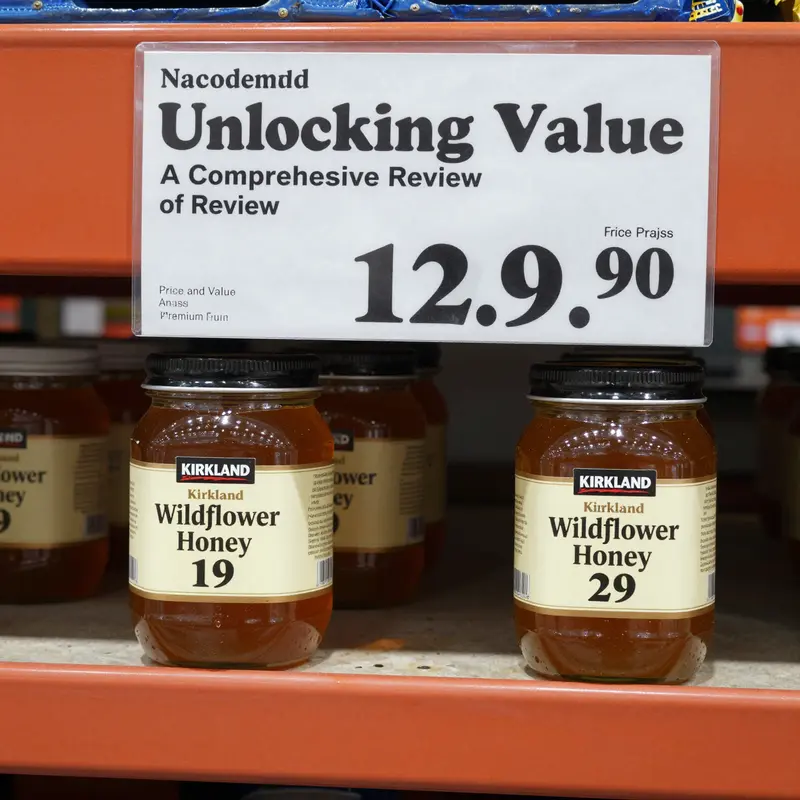
A five pound jar of private-label wildflower honey sits in many kitchen cupboards not just as a pantry staple but as a case study in how value can be defined when purity and flavor meet careful pricing. This honey, marketed as a straightforward, all-purpose sweetener, offers a practical snapshot of what it means to buy in bulk without surrendering quality. The jar communicates its core promises in a language most home cooks understand: a blend of blooms harvested in a defined region, a product described as 100 percent pure and natural, and a texture that balances pour with thickness. The aroma greets you first, a bright floral note that hints at the wildflower sources and the temperate climates where bees collect nectar. The sweetness that follows carries a natural roundness rather than a sharp edge, making it versatile for tea, yogurt, pastries, or a glaze during roasting. In the kitchen, its viscosity proves forgiving; it drizzles smoothly over breakfast bread, yet it thickens enough to cling to a brush for a glossy finish on roasted meats. Those small sensory cues—aroma, sweetness, and mouthfeel—work together to give this honey a distinctive identity among pantry staples and to justify its place in everyday cooking as more than just a sugar substitute.
From a consumer standpoint the most striking feature is how far the price goes toward delivering real value. The container in the standard bulk size carries a price that appears modest at first glance, yet it translates into a compelling unit price once you do the math. The figure commonly cited is around twelve to thirteen dollars for an 80 ounce jar, which equates to roughly 0.16 dollars per ounce. That means a single bulk jar delivers honey at about 2.50 dollars per pound, a fraction of what many shoppers expect to pay for smaller, boutique or brand-name honeys. The math matters because it reshapes decisions around daily usage and storage. When a household uses honey for tea and toast, in baking projects, or for a spoonful in a warm pan sauce, the savings multiply with repeated purchases. It is not that this option is the cheapest honey on the market, but the cumulative cost of daily use becomes a practical argument for bulk buying. In many kitchens this transforms from a simple preference into a deliberate budgeting choice, turning a small indulgence into a sustainable habit.
Quality is not a secondary consideration here. The product is labeled as 100 percent pure and meets high standards of consistency, and the source is described as wildflower in origin with origins traced to Argentina. This combination of purity and provenance helps set expectations for flavor and reliability. In the jar, the honey’s color, aroma, and texture align with a traditional wildflower profile—floral notes that are not overpowering, a gentle sweetness that lingers, and a smooth mouthfeel that remains approachable in a wide range of culinary applications. This is not a one-note sweetener; the bloom-forward character supports a spectrum of uses from subtle drizzle over yogurt to a robust glaze for roasted vegetables or meat. The designation of US Grade A underscores a level of quality and consistency that matters whether a cook is layering flavors in a grandmother’s recipe or developing a modern glaze for a weeknight dinner.
Consumer feedback compounds these observations with practical clarity. In spaces where home cooks share tested opinions, the bulk honey often earns praise for its value, its clean labeling, and its versatility. Reviewers highlight its rich yet balanced flavor and a texture that behaves well under heat and cool conditions alike. In blind tastings conducted by enthusiastic culinary testers, many observers noted a depth of flavor that can stand up to more expensive, premium honeys while preserving a smoother finish that is easy to incorporate into everyday recipes. The consensus is not that this honey is the only option worth considering, but that it is a surprisingly strong contender when price and performance are both on the table. The blend of positive consumer feedback and disciplined sensory evaluation helps to position this honey as a practical choice for families and for anyone who cooks in volume.
Availability and real-world practicality complete the picture. This honey is a staple in large warehouse club settings where bulk purchases are common and shelf space is tuned for everyday use. The appeal rests not only in the price per ounce but in the convenience of a bulk format that reduces the frequency of trips to the store. For households who keep a well used supply on hand, the bulk jar supports steady usage without the constant reordering that smaller jars require. Real-time pricing and availability can shift with promotions and stock levels, so shoppers often turn to price trackers and shopping aids to confirm current values. Those who want a quick sense of price dynamics can consult a centralized pricing hub that aggregates real-time data for warehouse club honey and similar pantry staples. In the meantime, a wider view of private-label pantry goods can offer context for how value is engineered across categories. For readers seeking a broader sense of warehouse-store value in the larger pantry ecosystem, an internal hub on costco-food provides a helpful overview of how private-label lines balance cost with quality across everyday staples. This internal resource, linked here for context, helps readers compare how bulk options stack up against mainstream brands while keeping flavor and purity in the conversation. costco-food
The practical takeaway is clear. For families that bake or brew or simply reach for honey at the breakfast table with regularity, the combination of price and purity makes a compelling case. The 80 ounce jar is more than a raw material for recipes; it is a long-term ingredient that supports consistent results in a kitchen that values both flavor and frugality. When a cook wants a honey that offers a confident, floral profile without a heavy or cloying sweetness, this option delivers that balance with minimal fuss. It is easy to imagine this honey keeping a routine pantry steady through the seasons, ready for a quick glaze on a sheet pan of vegetables, a glaze for roasted chicken in a weeknight dinner, or a spoonful stirred into tea that becomes part of the daily ritual. The practical value comes not from chasing novelty but from delivering dependable performance at a price that respects a family budget. The cost per ounce is low enough to invite experimentation in the kitchen without fearing waste, and the labeling reinforces a sense of reliability that matters when people cook from scratch and want to trust the ingredients they reach for.
In short, the private-label wildflower honey presents a coherent story of price, purity, and practicality. It does not promise to be the rarest or the most exclusive option, yet it delivers a consistent, well rounded honey that earns its keep in an active family kitchen. The blend of Argentine sourcing, US Grade A quality, and a format designed for bulk use ties together the practical needs of households with the sensory pleasure of a robust honey. For readers who value a straightforward purchase that supports daily cooking and mindful budgeting, this honey offers a persuasive case study in how value can be defined in real terms: a product that tastes right, performs reliably, and pays off at the checkout.
External data point: for real-time price context, see the public price tracker maintained by a shopping app dedicated to warehouse club pricing at https://cooklist.app/costco/kirkland-signature-wildflower-honey-price
Kirkland Wildflower Honey Review: Tracing Purity, Flavor, and Argentina-Sourced Ingredients
Honey has a quiet authority in the pantry. It accompanies morning tea, sweetens morning yogurt, and glazes toast with a warmth that feels earned rather than manufactured. When a private-label option sits in the same aisle as premium brands yet arrives with a price tag that invites bulk use, it invites closer attention. The Kirkland Wildflower Honey is one of those items that rewards a careful read of both its price and its provenance. It sits at the intersection of value and flavor, offering a practical case study in how a store-brand line can deliver both consistent quality and meaningful sourcing stories without demanding a premium price. In this sense, the product is more than a mere sweetener; it exemplifies a deliberate sourcing strategy, a transparent labeling philosophy, and a flavor profile that aligns with home cooking and everyday baking alike. What follows is a synthesis of the key signals that shoppers rely on when they decide whether a jar of honey is a sensible everyday staple or a fleeting indulgence, and why this particular jar tends to sit on the shopping list for families who value both taste and economy.
First comes the price, and in that domain the Kirkland option provides a compelling invitation to buy with confidence. The 5-pound jar, a size that seems purpose-built for households that use honey with regularity, is priced at approximately $18.57. That translates to about $3.71 per pound, a figure that stands out next to many comparable products found in conventional grocery aisles. The price-per-pound becomes even more striking when set beside smaller, 8-ounce jars that routinely list for well north of $12. In other words, the per-volume savings can accumulate quickly for families who enjoy honey across breakfasts, snacks, and cooking experiments. It matters less whether every spoonful is the same as a boutique import and more whether the jar offers steady quality, reliable sweetness, and a predictable texture for everyday needs. The large format also reduces the frequency of re-purchasing, which many households appreciate when they consider the total cost of ownership over a month or a season.
Labeling and sourcing details further sharpen the value proposition. The product is marketed as 100% Pure Natural and Kosher, with the explicit note that it is sourced from Argentina. Those claims carry two kinds of reassurance. On the purity side, the language signals that no additives or blends dilute the natural honey, aligning with consumer expectations for a straightforward sweetener that can rotate between tea, toast, and baked goods without introducing unexpected flavors. On the sourcing side, Argentina has long been associated with a robust honey supply that reflects diverse floral landscapes. The notion of wildflower honey, in particular, hints at a blend of bloom sources rather than a single monoculture nectar, which tends to yield a more complex aroma and a rounded sweetness. The combination of purity and traceability is appealing for families who want to know where their pantry staples come from and who value consistent ingredients when cooking for a crowd.
Professional tastings add a further layer of validation. In a blind tasting conducted during a live online event, experts rated the honey highly for its flavor depth and smooth texture, noting a presence that can rival more expensive brands without sacrificing balance or finish. While a single tasting cannot capture every batch’s nuance, these impressions align with what consumers report in everyday use: a rich, natural sweetness with a floral lift that never veers into overpowering or artificial notes. The texture tends to be pleasantly viscous, offering a drizzle that sticks to the bread or a spoonful that blends cleanly into tea or yogurt. Taken together, the sensory notes echo the labeling claims: a product that stays true to its natural roots while delivering a dependable, household-friendly sweetness. For readers who want a broader sense of provenance and quality control beyond the tasting room, a comparative look at other Kirkland honey varieties can be instructive; see the linked overview of Kirkland Organic Raw Honey for a related discussion of sourcing and processing practices in this family of products: Kirkland Organic Raw Honey Review.
After the sensory and sourcing signals, the practical uses of the honey reinforce its role as a kitchen workhorse. The wildflower variety is known for its versatility; it can be enjoyed straight from the jar, spread on a slice of bread, or whisked into a sauce or glaze with a quiet complexity that comes from multiple floral sources. In baking, it contributes moisture and depth without imparting an overwhelming floral note that might clash with stronger ingredients. In yogurt or oatmeal, it delivers a gentle sweetness that lets other flavors—citrus, nuts, cinnamon—shine through. In cooking, its rounded sweetness can balance acidity in dressings or marinades, providing a natural caramelization that enhances browning without commercial sugar’s sharpness. The Argentinian origin, coupled with the wildflower blend, tends to yield an aromatic profile that complements a broad array of pantry applications—from simple breakfasts to more deliberate weeknight meals. These practical cues—flavor suitability, texture, and cost—combine to explain why households reach for this honey with regularity.
A closer look at the sourcing and packaging helps illuminate why the product feels credible on the counter. The jar size is generous enough to justify bulk use, but the mass-market presentation is straightforward and user-friendly, with clear labeling and a straightforward pour that avoids the drips that often accompany darker, crystallized honeys. Crystallization is a natural characteristic of many honey varieties, including wildflower blends. When crystallization occurs, the common remedy is a gentle warm-water bath to restore liquidity, never to force a quick fix with heat that could degrade aroma or flavor. The packaging and storage guidance that accompanies many honey products is thus not simply marketing—it’s a practical reminder that the product will perform consistently over time, a trait that matters for busy households juggling breakfasts, snacks, and baking tasks across a week.
The cross-channel visibility of Kirkland Wildflower Honey adds another layer of reliability for shoppers who appreciate multiple buying options. In addition to in-store availability, the product is listed on major retailers’ online platforms where the same claims of purity and kosher certification appear, often with similar specifications about floral origin and processing standards. The Walmart listing that mirrors similar language emphasizes the same themes of purity and robust flavor, and it frames the product as a premium option within Kirkland’s broader honey family. The Walmart page describes the honey as 100% pure, kosher, and crafted with high-quality ingredients sourced from the finest local farms, noting production rooted in Argentina to support a distinctive, rich flavor profile. This cross-channel consistency strengthens the perception of a reliable, well-supported product rather than a one-off store-brand option. It also suggests a broader supply chain framework that vendors can communicate to shoppers who pay attention to origin stories and batch-to-batch consistency.
For readers who want to explore related discussions of Kirkland’s approach to honey—and to understand how a private-label strategy translates into both value and quality—there is a related resource that examines another honey variety in the same family. The link provides a broader context for how Kirkland brands present purity, sourcing transparency, and flavor integrity, which can be useful when comparing jar-by-jar experiences across the line. While every batch has its nuances, the lineage of this product—Argentina-sourced, 100% pure, and Kosher—offers a good baseline for expectations and kitchen results.
In considering the overall picture, the Kirkland Wildflower Honey offers a compelling blend of cost-effectiveness, clear labeling, and a flavor that holds up in both plain and culinary settings. The combination of price per pound, the promise of purity, and the assertion of a natural, multi-floral profile makes it a practical choice for families who want to stock their pantry with a versatile, dependable sweetener without paying a premium. The presence of an external validation from professional tastings, alongside consumer feedback that echoes its versatility, helps anchor the narrative in tangible experiences rather than marketing rhetoric. A reader evaluating this product should weigh the value of bulk use against the qualitative signals—the aromatic complexity from Argentina’s bloom mix, the robust yet balanced sweetness, and the reliable texture that pours and drizzles without fuss.
As a closing note on sourcing and quality signals, the explicit reference to Argentina and the commitment to 100% Pure Natural labeling together form a coherent story about what the product aims to deliver: a honey that reflects regional floral abundance, delivered through a process that preserves natural sweetness and provides consistent performance in daily kitchen tasks. Whether used as a soothing tea companion, a glaze for roasted vegetables, or a gentle sweetener in baking, this honey tends to deliver predictable results that satisfy both practical and sensory expectations. In the end, the value proposition rests on more than price; it rests on a coherent package of authenticity, flavor reliability, and accessibility that makes it a dependable staple for families who prefer bulk buying without compromising on taste. External reference: Walmart’s listing for the Kirkland wildflower honey provides parallel claims about purity, kosher status, and origin, contributing to a broader picture of how the product is positioned across major retail platforms. https://www.walmart.com/ip/KIRKLAND-Premium-Wildflower-Honey-5-lbs-100-pure-and-kosher-full-of-rich-flavor/49628378
Kirkland Wildflower Honey: Value, Flavor, and Consensus
Kirkland Wildflower Honey sits at the center of many pantry conversations, merging Costco’s private-label reliability with the rustic appeal of a wildflower harvest. The five-pound jar offers compelling value, translating to roughly $3.71 per pound depending on current pricing. That efficiency matters when you bake, sweeten tea, or glaze a roast in larger batches, and it does so without compromising flavor or authenticity. The packaging emphasizes 100% Pure Natural and Kosher certification, cues that resonate with shoppers seeking purity and dietary alignment. Argentina is listed as the origin, a sourcing region known for diverse nectar flows and a flexible varietal profile that keeps the sweetness balanced rather than overpowering.
In aroma and flavor, the honey delivers a robust, natural sweetness with a light floral echo. The texture pours with confidence, showing a steady viscosity that coats a spoon without running like syrup. On taste tests and real-world use, reviewers note a clean finish and a versatile profile that works well in tea, yogurt, or a glaze that benefits from slow diffusion of sweetness.
Consumer feedback across platforms often highlights reliability and consistency from jar to jar, with many buyers describing the product as a dependable staple for daily kitchen use. The bulk format is well-suited to households that burn through honey in weekly rhythm, offices with shared amenities, or cooks who batch-bake during certain seasons. The value proposition is clear: more honey for less money, without asking cooks to compromise on quality.
For readers seeking a broader context, consider how Kirkland’s honey sits beside other varieties in the lineup. See the Kirkland Organic Raw Honey Review for a comparative perspective on purity, sourcing, and pricing across the range. This cross-reference helps illustrate how the brand blends accessibility with a spectrum of floral profiles. For safety and labeling context, the FDA offers guidance on honey labeling and consumer expectations: https://www.fda.gov/food/buy-store-and-serve-safe-food/honey
Final thoughts
In conclusion, Kirkland Signature Wildflower Honey presents a compelling case for business owners focused on cost-efficiency without sacrificing quality. With its attractive pricing, pure ingredient sourcing, and positive consumer feedback, it represents an excellent addition to your inventory. Whether you use it for cooking, baking, or retail, incorporating this honey into your offerings can enhance your business’s appeal. Don’t miss the opportunity to leverage this high-quality product for your operations.