
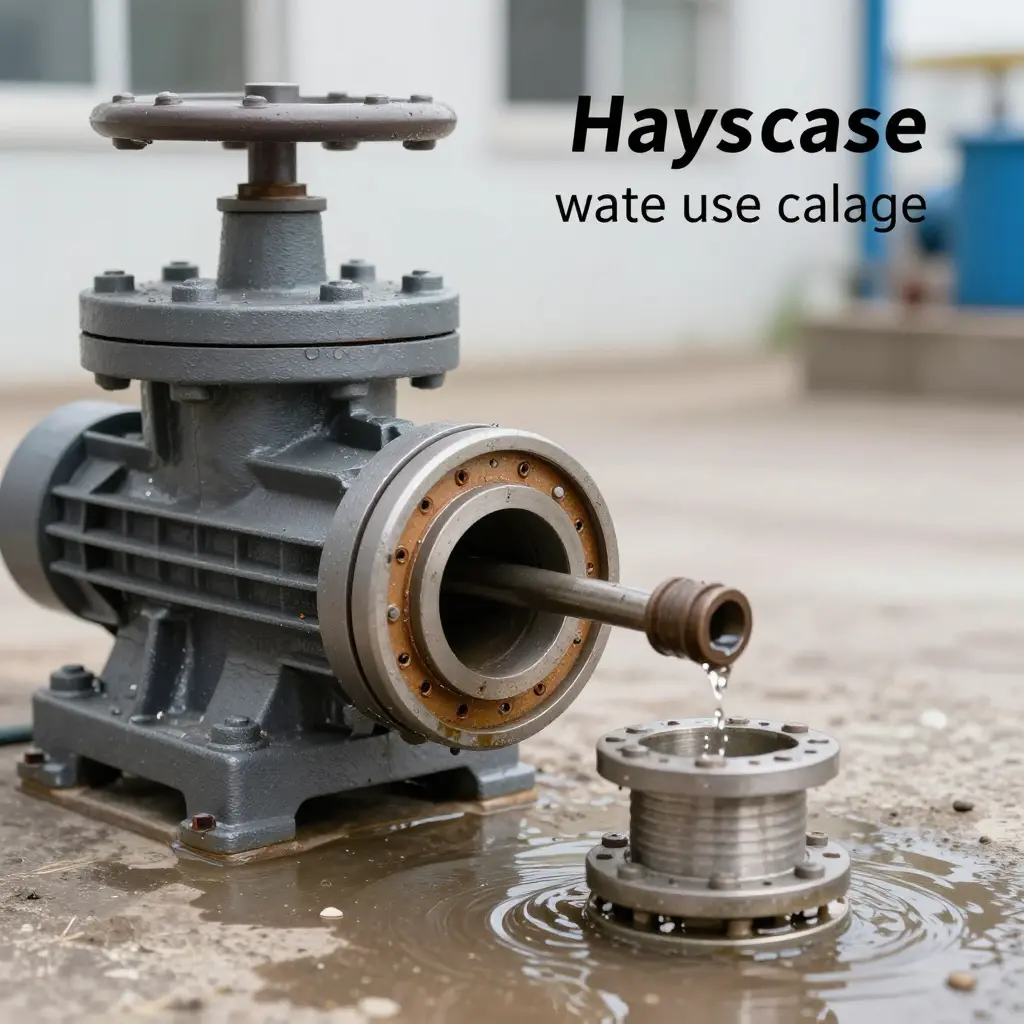
Introduction
Choosing gland packing or a mechanical seal for a slurry pump usually comes down to three things you can measure: water consumption, leakage behavior, and total cost. The sections below work through each one, so plant engineers, maintenance managers, and pump designers can decide on evidence rather than habit.
Sealing is where a slurry pump’s operating costs concentrate. In abrasive, high-solids service, the sealing method sets how much fresh water the plant burns, how much material escapes at the shaft, and how often the pump goes down for repair.
Water is the easiest of the three to measure. Packing needs a continuous flush to cool and lubricate the rings; a mechanical seal needs much less, and sometimes none, depending on its design and the pump’s duty.
Leakage is the second. Packing is meant to leak a controlled amount, and that leak is what keeps the shaft lubricated. A mechanical seal is built to show almost no leakage, but how well it does that depends on the fluid, the solids it carries, and how well the faces are shielded from abrasive particles.
Cost is the hardest of the three, because it folds together purchase price, installation labor, water and disposal charges, downtime, and how often the unit is replaced.
What Gland Packing Is and How It Works
Gland packing, also called compression packing, seals a shaft with braided rope cut into rings and compressed around it. It survives on slurry pumps for the same reasons mechanical seals usually don’t: abrasive solids, heavy vibration, and shafts that run a little off-centre.
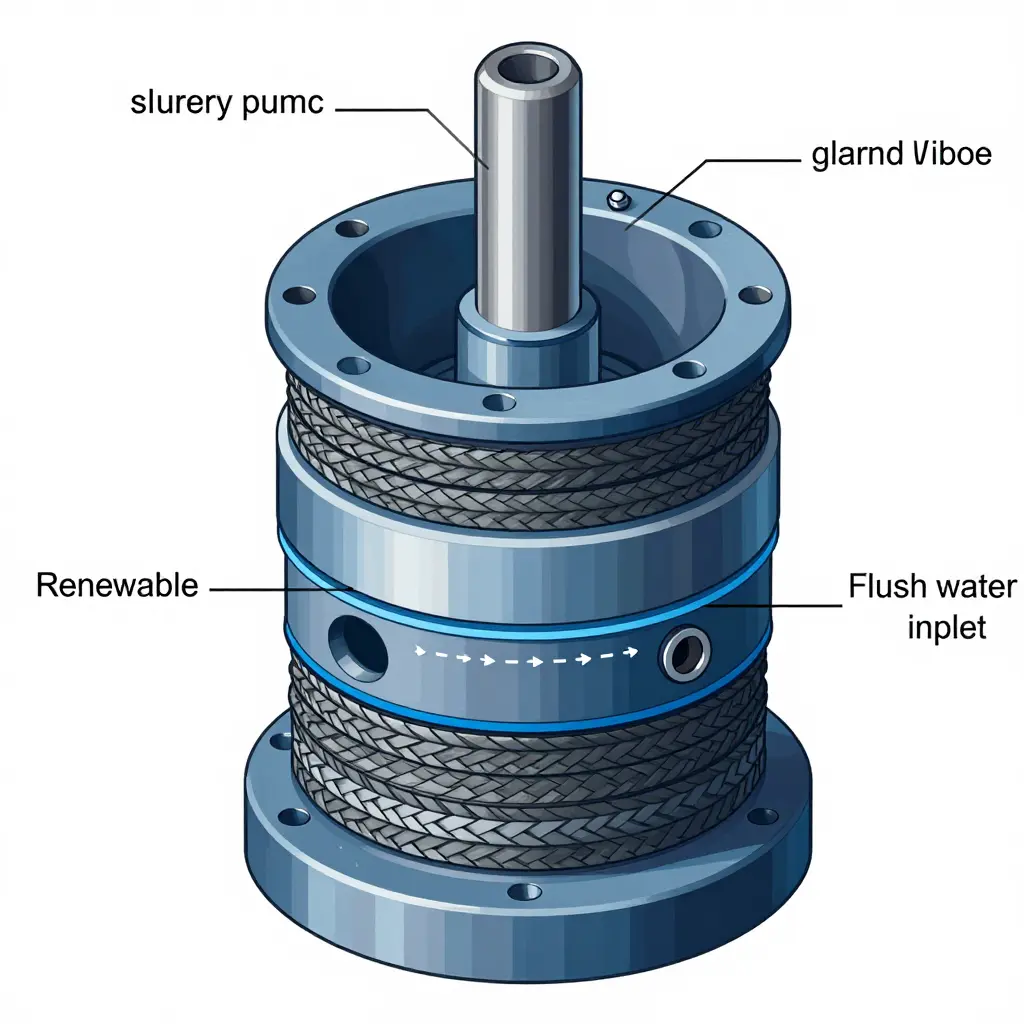
Construction: Braided Packing Rings
The rope is braided from yarns of PTFE, graphite, aramid, or acrylic, in a diagonal or square interlock. The braid gives a dense, resilient cross-section that resists extrusion into the stuffing box clearance but stays flexible enough to follow shaft runout.
- Rings are cut to length and installed one at a time, with the cut joints staggered roughly 90 degrees apart
- Each ring seats against the shaft and the bore of the stuffing box
- A gland follower at the top of the box applies axial load to the ring stack
Operating Principle: Compression Against the Shaft
Tightening the gland nuts drives the follower down onto the ring stack. The rings cannot easily expand outward, so they deform inward and press against the rotating shaft — more precisely, against the renewable sleeve that protects the shaft. That radial contact is the sealing interface, and friction there, helped along by the abrasive slurry, is what wears the sleeve. It is why sleeves are hardened or coated and swapped out during routine rebuilds.
The Lantern Ring and Flush Water
Many slurry pump stuffing boxes have a lantern ring: a perforated spacer set at a fixed position in the ring stack, used to spread flush water evenly around the shaft.
- Flush water enters through a tapped port in the stuffing box and passes through the lantern ring’s holes
- The water forms a clean barrier that keeps abrasive solids out of the packing
- The same flow cools the packing and lubricates the shaft/sleeve interface
- Injection pressure is normally set slightly above the pump’s sealing-chamber pressure
Why Controlled Leakage Is a Design Feature
Gland packing is not built to be leak-tight. The drip is what carries friction heat away and flushes out particles that would otherwise grind the sleeve. Run bone-dry, packing overheats, glazes, and scores the shaft within hours. So a defined leak rate — measured in drops per minute — is a specification, not a fault.
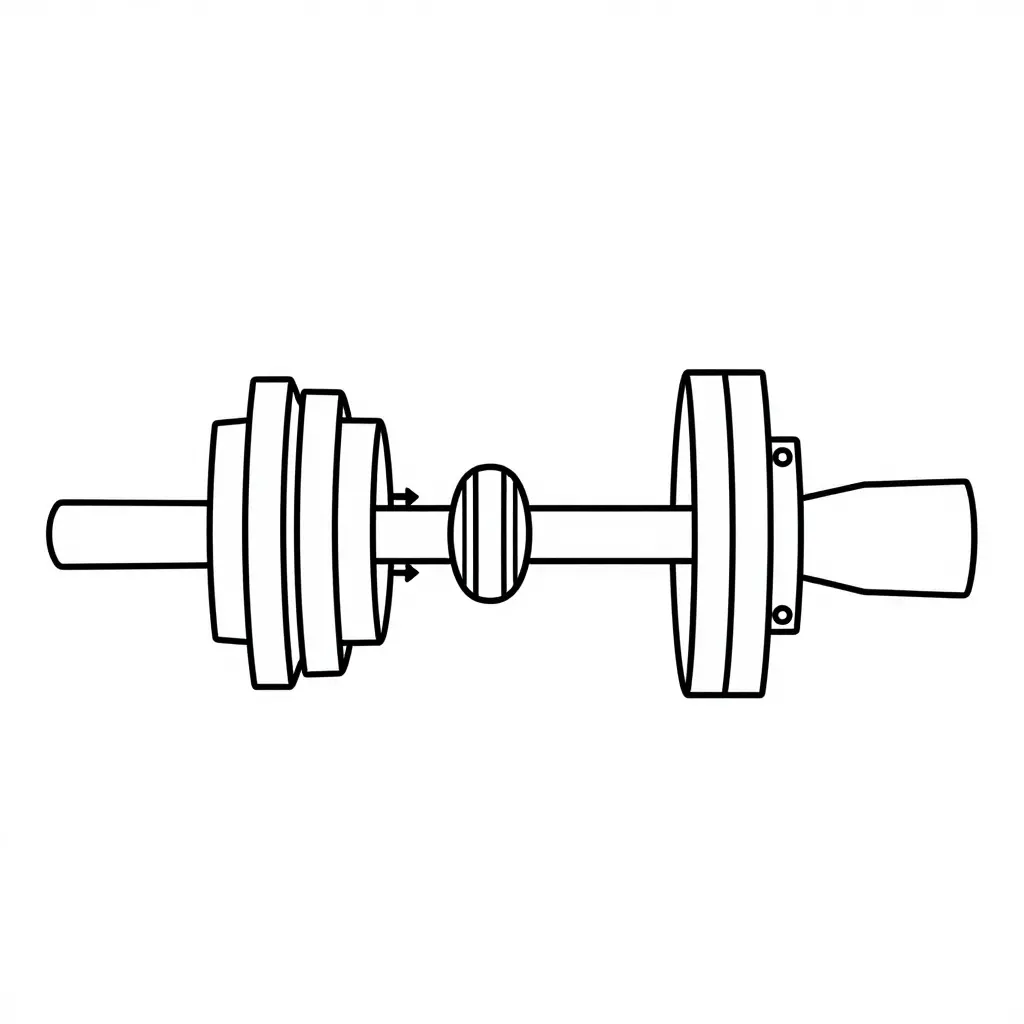
The schematic shows the stack from the wet end outward: the shaft through the centre, the compressed rings, the mid-stack lantern ring that receives the flush water, and the gland follower that squeezes the rings to set leakage. The arrows follow the flush water as it enters the lantern-ring port and spreads along the shaft, lubricating the packing and carrying abrasive solids away from the sealing surfaces.
What a Mechanical Seal Is and How It Works
A mechanical seal controls leakage by holding two extremely flat, lapped surfaces in contact on a rotating shaft. Instead of pressing soft rope against the shaft, it creates a defined interface where a micron-thin fluid film does the sealing. On a slurry pump, that difference drives water consumption, maintenance, and cost.
The Key Components
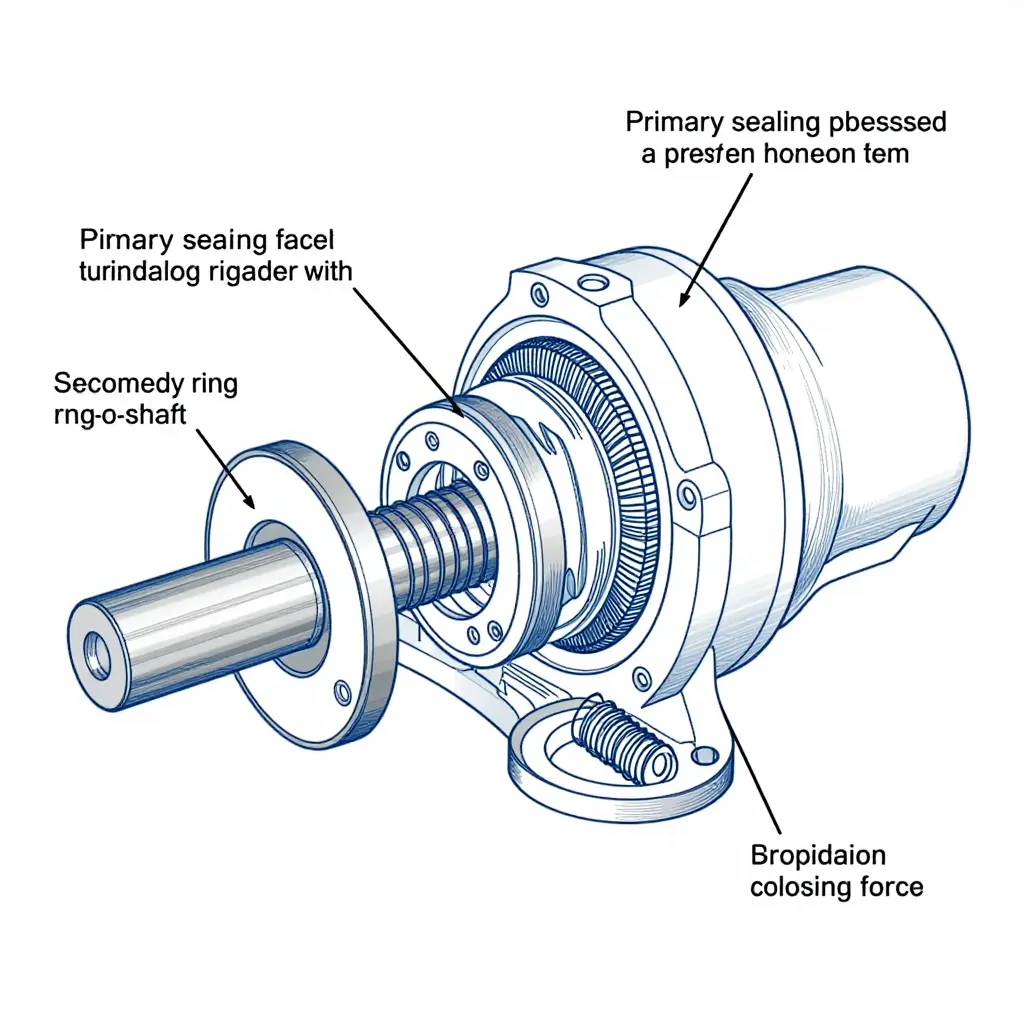
- Primary sealing faces – the mating surfaces that limit the main leak path
- Rotating ring – turns with the shaft and is typically the harder, more wear-resistant material
- Stationary ring – fixed to the housing and loaded against the rotating ring
- Secondary seals – O-rings, gaskets, or a bellows that close off ring-to-shaft and ring-to-housing paths
- Spring or bellows – supplies the closing force and compensates for face wear
Primary and Secondary Sealing Faces
The seal faces carry the load. The primary faces are the two flat, polished rings that touch each other and control the main leak path. The secondary seals are the static joints that stop fluid escaping around the rings instead of between them. Together they form a chain of barriers: primary, secondary, and static.
The rotating ring moves with the shaft, while the stationary ring stays anchored to the pump housing. One ring is usually a hard material such as silicon carbide; the other may be carbon, a softer grade chosen to wear sacrificially and protect the harder face.
How the Fluid Film Prevents Continuous Leakage
The faces don’t actually run dry. A fluid film a few microns thick forms between them, lubricating the faces and carrying away friction heat; it vaporizes at the outer edge, so what escapes is a few drops per hour rather than the steady stream a packed gland produces. A seal flush plan supplies clean barrier or quench fluid to keep that film stable and free of abrasive particles.
Closed-Loop Sealing vs. Open Leakage
Packing is designed to drip, and the natural response — tightening the gland to slow it — only adds friction and sleeve wear. A mechanical seal works the other way: it runs on a small flush or barrier flow that can be cooled and recirculated in a closed loop, so the sealing fluid is managed rather than simply discharged. That is why a seal can cut water use sharply and hold visible leakage close to zero.
Water Use: Flush Requirements and Consumption
Water demand is the clearest operational split between the two. Packing needs a continuous flush to lubricate and cool the rings; a mechanical seal may use far less, or none, depending on its design and flush plan.
Why Gland Packing Needs Continuous Flush
Gland packing works by allowing a controlled leak along the shaft. The leak path is intentional, but it means water moves through the stuffing box the whole time the pump runs. The flush does several jobs:
- It lubricates the packing rings, reducing friction and wear.
- It carries away heat generated at the shaft interface.
- It flushes abrasive solids away from the packing to extend service life.
- It helps maintain a stable sealing water pressure at the gland.
Because this flow runs whenever the pump operates, flush water consumption adds up quickly, especially on large, continuously running slurry pumps.
Where Mechanical Seals Differ
Mechanical seals use two lapped faces running against each other, so leakage is minimal by design. Depending on the arrangement, flush water use can range from a small quench flow to essentially zero. Single seals with a simple quench may need only a trickle, while dual (double) seals often require a barrier fluid and a more defined support system.
| Sealing Method | Typical Flush Requirement | Relative Water Use |
|---|---|---|
| Gland packing | Continuous flush while running | High |
| Single mechanical seal (quench) | Minimal, intermittent | Low |
| Dual mechanical seal (barrier) | Circulated barrier fluid | Varies |
| Mechanical seal, no flush | None in some designs | Very low to none |
Variables That Affect Water Consumption
Water use is not fixed. It shifts with the application:
- Pump size – larger shafts and stuffing boxes need higher flush rates.
- Solids concentration – higher abrasive loading usually demands more sealing water to keep the packing clean.
- Seal design – quench, single, or dual arrangements each change the required flow.
- Duty cycle – continuous operation consumes far more water than intermittent service.
- Flush plan – API-style plans set the pressure, flow, and quality of sealing water.
For anyone weighing total cost of ownership, the comparison is flush-water consumption against seal price and maintenance. Packing trades higher water use for simplicity; a mechanical seal trades a higher purchase price for lower running water demand.
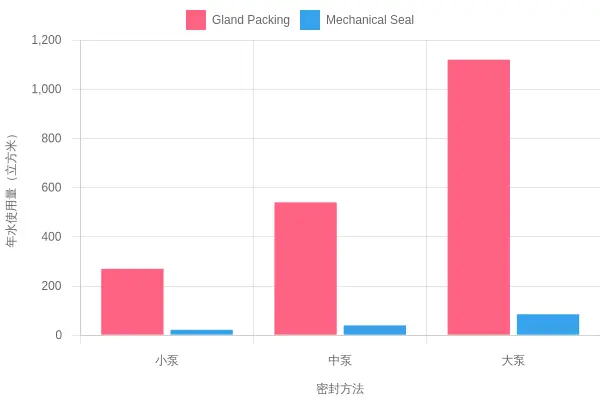
The chart shows how far apart the two sit. Because packing needs a continuous flush to cool and lubricate the rings, it draws water for every hour the pump runs. A mechanical seal needs only a modest barrier or quench supply, which is why its bars stay near the axis at every pump size.
- Small pump: gland packing at roughly 270 m3/year versus about 22 m3/year for a mechanical seal.
- Medium pump: gland packing climbs to roughly 540 m3/year, while a mechanical seal stays near 40 m3/year.
- Large pump: gland packing reaches roughly 1,120 m3/year against about 85 m3/year for a mechanical seal.
The gap widens with pump size, because flush flow scales with shaft diameter and the number of packing rings. Where a plant pays for both supply water and effluent treatment, that volume is where the operating cost sits.
Leakage Behavior and Environmental Impact
Gland packing and mechanical seals sit at opposite ends of the leakage spectrum, and that gap drives most of the operational, safety, and compliance trade-offs on slurry pumps.
Gland packing: controlled leakage by design
Gland packing relies on controlled leakage to function. The braided rings are never meant to seal completely. A small amount of liquid must escape between the packing and the shaft sleeve to carry away friction heat and lubricate the running interface.
Operators tune the drip rate – often described as a few drops up to a steady trickle per minute – to keep the shaft cool without flooding the surrounding area. On abrasive duty, however, the escaping fluid is rarely clean water. It is slurry leakage: a mix of solids and liquids that can erode sleeve surfaces, build up around the stuffing box, and stain nearby equipment.
Mechanical seals: near-zero visible leakage
Mechanical seals use two lapped faces held together by spring pressure and a thin fluid film. They are engineered for near-zero visible leakage, so the seal chamber stays essentially dry under normal running conditions.
The small amount of flush or barrier fluid they consume is used for cooling and lubrication, not as an intentional discharge.
What the difference means in practice
- Product loss: Gland packing continuously vents process fluid, so material is lost around the clock. Mechanical seals minimize that loss.
- Housekeeping: Packing leaves a persistent drip that demands regular cleanup and can create slippery floors. Seals keep the area far cleaner.
- Safety: Slurry leakage near hot surfaces or walkways raises slip and exposure risks that must be actively managed.
- Environmental compliance: Continuous discharge can complicate environmental compliance, especially where strict effluent or fugitive-emission limits apply.
| Aspect | Gland Packing | Mechanical Seal |
|---|---|---|
| Leakage mode | Controlled leakage (intentional) | Near-zero visible leakage |
| Typical drip rate | A few drops to a trickle per minute | Essentially none |
| Lubrication source | Leakage film on shaft | Flush / barrier fluid |
| Cleanup demand | High | Low |
Packing accepts a persistent, managed drip; a mechanical seal is built to stay dry. Which fits depends on how much leakage your process, your site, and your permits can tolerate.
| Factor | Gland Packing | Mechanical Seal | Typical Winner |
|---|---|---|---|
| Water Use | High – continuous flush water lubricates and cools the packing, often 3-8 L/min per pump | Low – a single seal needs only light quench; a dual seal uses a small buffer-fluid flow | Mechanical Seal |
| Leakage | Continuous visible drip by design, typically 40-60 drops/min | Near-zero to minimal, often measured in millilitres per hour | Mechanical Seal |
| Initial Cost | Low – simple hardware and a low unit price | High – precision faces, springs and gland assembly cost several times more | Gland Packing |
| Maintenance Effort | Frequent – repack and re-adjust steadily, needs routine attention | Infrequent when correctly installed and properly flushed | Mechanical Seal |
| Shaft Wear | Significant – packing rides directly on the shaft or sleeve, wearing both | Minimal – the faces run against each other, not the shaft | Mechanical Seal |
| Retrofit Complexity | Easy – fits most existing stuffing boxes with minimal modification | Moderate to high – may need a sleeve change, seal chamber and flush piping | Gland Packing |
| Solids Tolerance | Good – tolerates abrasive slurries and grit without catastrophic failure | Poor – abrasive solids score the faces and shorten seal life | Gland Packing |
Cost: Initial Investment and Total Cost of Ownership
The cheaper option on the purchase order is often the more expensive one over a pump’s working life. A fair comparison has to weigh total cost of ownership, not the sticker price alone.
Upfront component cost
- Gland packing: Very low. Packing rope is inexpensive, and many existing stuffing boxes can be reused with only minor modification.
- Mechanical seal: Noticeably higher. A seal, gland plate, and sometimes a flush plan or cartridge assembly add genuine capital cost.
The gap is real, but it is also where most comparisons stop.
Water and energy cost
Gland packing must leak to function. That continuous leakage consumes sealing water, and the friction at the stuffing box wastes energy. Mechanical seals run with far less flush water and lower drag, which tends to trim both water bills and power draw over time. On a high-duty slurry line running around the clock, this operating gap can quietly exceed the purchase-price difference.
Labor for repacking
- Packing requires regular adjustment and periodic repacking – a recurring maintenance task that ties up skilled hands.
- Mechanical seals typically last longer between replacements but demand more care and skill to install correctly.
Maintenance downtime
Downtime is usually the biggest hidden cost. Repacking interrupts production often; a failed seal stops the pump until it is replaced. Beyond lost output, maintenance downtime carries labor, parts, and scheduling costs — and it is where a careful seal cost comparison often reverses the ranking in favor of the more expensive-up-front option.
Expected service life
Packing may serve for weeks to a few months depending on slurry abrasiveness, while mechanical seals generally deliver months to years. A longer service life spreads the higher initial cost across far more operating hours.
Comparing the categories side by side
| Cost category | Gland packing | Mechanical seal |
|---|---|---|
| Upfront component cost | Low | High |
| Sealing water use | High (continuous leak) | Low |
| Energy draw | Higher friction losses | Lower |
| Repacking labor | Frequent | Infrequent |
| Maintenance downtime | Frequent, shorter stops | Rare, longer stops |
| Typical service life | Weeks to months | Months to years |
Neither method wins everywhere. Where water is cheap, duty is light, and downtime is tolerable, packing’s low capital cost can make good sense. Where water, energy, and lost production are expensive, the higher upfront price of a mechanical seal is often recovered many times over.
Total Cost of Ownership Over Five Years
Choosing between gland packing and a mechanical seal on a slurry pump is rarely a price-tag decision; the purchase price is only the opening move. What shapes the maintenance budget is how each option behaves over years of operation, as labor hours, replacement parts, and water consumption add to the ledger.
Across five years the two cost curves have different shapes. A mechanical seal starts higher because of its larger upfront investment, then flattens as service life stretches out. Gland packing enters cheap, then climbs steadily as repacking labor and flush water keep drawing on the budget.
Key Factors When Choosing Between Gland Packing and Mechanical Seals
Sealing a slurry pump shaft depends on a handful of operational, environmental, and financial variables. Run through the factors below with your process and maintenance teams before you commit.
-
Slurry abrasiveness. Highly abrasive media such as sharp sand, milled ore, or ash wear down both packing rings and seal faces. Packing tolerates them longer because it can be adjusted and replaced cheaply; specify a mechanical seal for this duty and it needs hardened faces and a clean flush.
-
Solids particle size. Large or irregular particles can wedge between the packing and the shaft, causing scoring and rapid wear. Gland packing copes better with coarse solids, since a packed gland can be re-adjusted and re-packed on site, while mechanical seals suit finer, more uniform particles.
-
Pump duty cycle. Continuous, round-the-clock service tends to justify the higher upfront cost of a mechanical seal through lower ongoing maintenance. Intermittent or standby duty often favors gland packing, which tolerates idle periods without face damage.
-
Available flush water. Mechanical seals usually need a clean flush or quench supply to survive. Where clean water is scarce or expensive, the modest controlled leakage of gland packing may be the more practical option.
-
Environmental regulations. Site rules on leakage and discharge can decide the matter for you. Where strict containment or low-discharge limits apply, mechanical seals are often the only compliant route.
-
Maintenance capability. Be honest about whether your crew has the skills and tooling to install and align a mechanical seal correctly. If not, gland packing offers a simpler, more forgiving routine that most teams can handle in-house.
-
Budget horizon. Gland packing costs less upfront but often costs more over time in water, labor, and spare parts. Mechanical seals cost more initially yet frequently win on total cost of ownership across a multi-year horizon.
No single factor decides the answer on its own. Weigh them together against your specific duty, then validate the final choice with real operating data before you standardize across a plant.
A Practical Decision Framework for Slurry Pump Sealing
Once the behavior of both options is clear, the harder question is which one fits a specific duty. Working through the four steps below in order gives engineers, maintenance managers, and pump system designers a recommendation they can trace back to evidence.
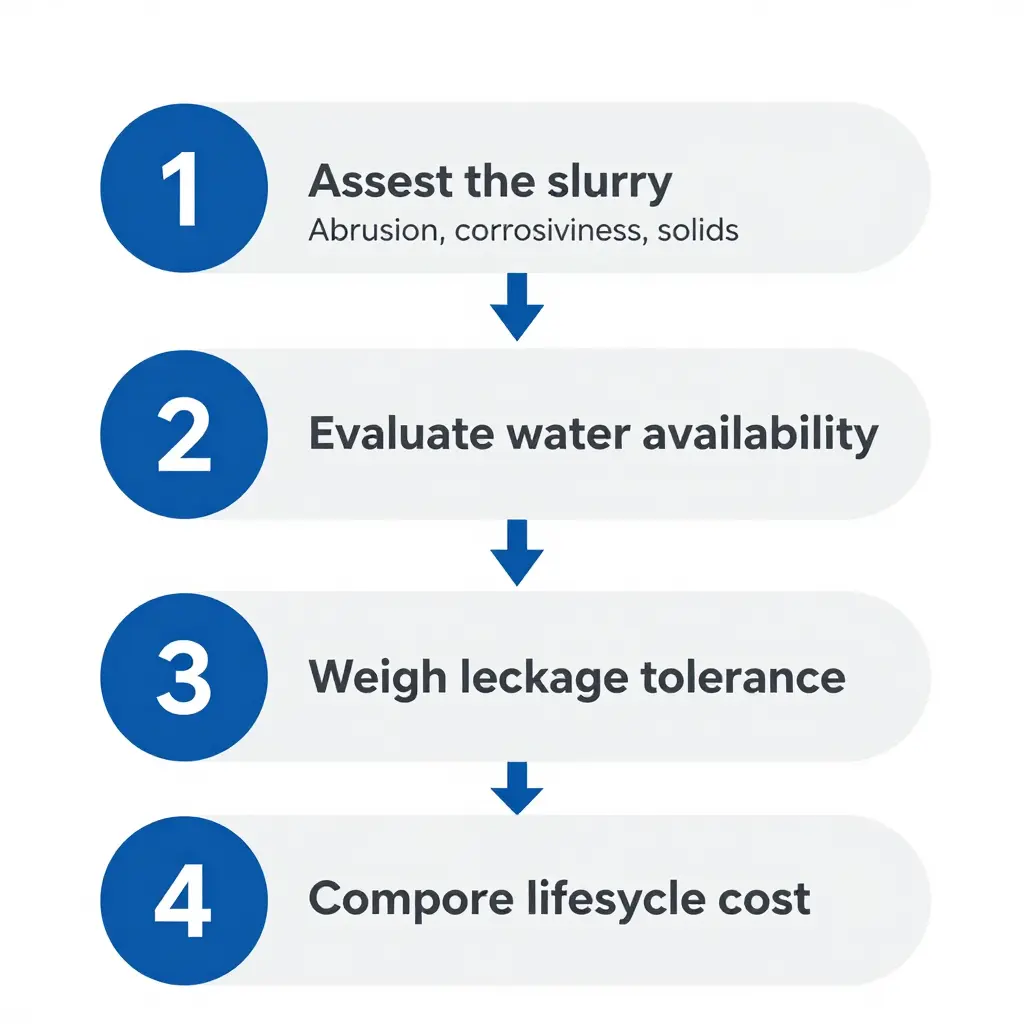
- Assess the slurry. Start with the fluid itself – solids concentration, particle size and shape, abrasiveness, corrosiveness, and temperature. Highly abrasive slurries punish the hard faces of a mechanical seal, while low-solids, mildly abrasive flows are far more forgiving to packing.
- Evaluate water availability. Gland packing relies on a steady flush water supply to lubricate and cool the braid. Where clean water is scarce, costly, or awkward to dispose of, a mechanical seal usually wins this stage of the seal selection process.
- Weigh leakage tolerance. Packing is designed to leak; a steady drip is normal and even necessary. If product loss, housekeeping, or contamination is unacceptable, that drip alone points you toward a mechanical seal.
- Compare lifecycle cost. Finally, move beyond purchase price and total the real numbers: water, energy, replacement parts, labor, and downtime over several years.
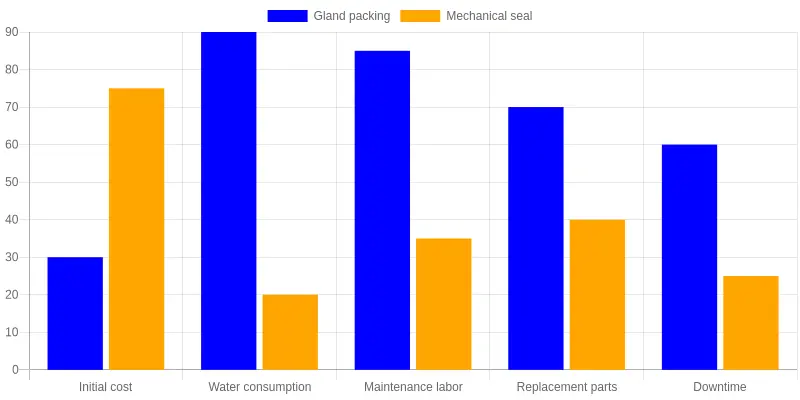
The chart makes the trade-off visible: packing is cheaper up front but carries heavier water and labor burdens, while a mechanical seal reverses that pattern. The right answer depends on which bars dominate at your site.
Treat the sequence as the basis of a repeatable slurry pump maintenance strategy: document each decision, then revisit it whenever the duty point, slurry chemistry, or water costs change. A framework you can defend beats a choice you have to justify after a pump fails.
Gland Packing vs Mechanical Seals on Slurry Pumps: FAQ
Common questions from engineers and maintenance managers weighing the two options.
Can mechanical seals handle abrasive slurry?
Yes, provided they are specified for the duty. Standard mechanical seals wear out fast in abrasive slurry because hard particles grind between the sealing faces, triggering rapid seal leakage. Heavy-duty options such as dual seals with a clean barrier-fluid flush, or cartridge seals with hardened faces, handle abrasives far better. The key is matching the seal design and flush plan to the particle size and concentration in your slurry.
How much water does gland packing use?
Gland packing typically consumes far more water than a mechanical seal because it relies on a continuous flush to lubricate and cool the packing rings. Depending on pump size and speed, this water use can range from a steady trickle to several liters per minute per pump. Across multiple pumps running year-round, that adds up to a significant utility and effluent cost. Mechanical seals usually need only a small amount of cooling or barrier fluid.
Why does gland packing leak by design?
Gland packing leaks intentionally because the thin film of water between the packing and the shaft is what lubricates the seal and carries away friction heat. If packing were tightened until it stopped dripping entirely, it would run dry, overheat, and score the shaft. So a controlled drip rate is a sign the packing is working correctly, not failing. This means some seal leakage is normal and expected with packing.
Is a mechanical seal worth the higher upfront cost?
Often yes, once you account for the full lifetime cost. Although a mechanical seal costs more to buy, it usually cuts water use, reduces seal leakage, and lowers maintenance labor enough to pay back the premium within months on an abrasive duty. The savings are largest on pumps that run continuously or sit in lines where diluted slurry is a problem. For low-duty, intermittent service, packing may still be the cheaper choice.
Can gland packing be converted to a mechanical seal?
Yes, many slurry pumps can be converted, but it is not a simple swap. You generally need a seal housing, a flush or barrier-fluid supply, and sometimes a new shaft or sleeve with the right surface finish. The pump’s duty, particle size, and available water supply all determine whether the conversion makes sense. A qualified seal supplier should size the conversion before you commit.
Which sealing method requires more maintenance?
Gland packing demands more routine attention: it must be re-tightened and eventually repacked as it wears. Mechanical seals generally run longer between service intervals, but when they fail they tend to fail suddenly and need skilled replacement. So packing asks for frequent small tasks, while seals ask for fewer but more technical interventions. The right answer depends on your maintenance team’s skills and how critical uptime is.
Conclusion: Matching the Seal to the Application
The choice between gland packing and a mechanical seal comes down to water use, leakage, and cost, and no single method wins on all three. The goal is to match the seal to the conditions the pump actually sees.
Water use is the clearest split. Packing needs a continuous flush, usually the largest single operating cost. Mechanical seals use far less water, though some slurry designs still require a clean quench or barrier fluid to protect the faces.
Leakage reverses the picture. Packing weeps by design, which keeps it cool and flushed but creates housekeeping and product-loss concerns. A mechanical seal runs drier and cleaner, but when one fails it can release a large volume at once rather than a controlled drip.
Cost is where packing has the edge up front: it is cheap and can often be repacked in place. Mechanical seals cost more to buy and install, yet can offset that with lower water consumption and less downtime over a long service life.
Neither approach is universally superior. Abrasive, high-solids slurries on operations that can tolerate some leakage often favor packing, while clean or regulated environments that value water savings and low leakage lean toward mechanical seals. Base your decision on the specifics of your application, not on a rule of thumb.