
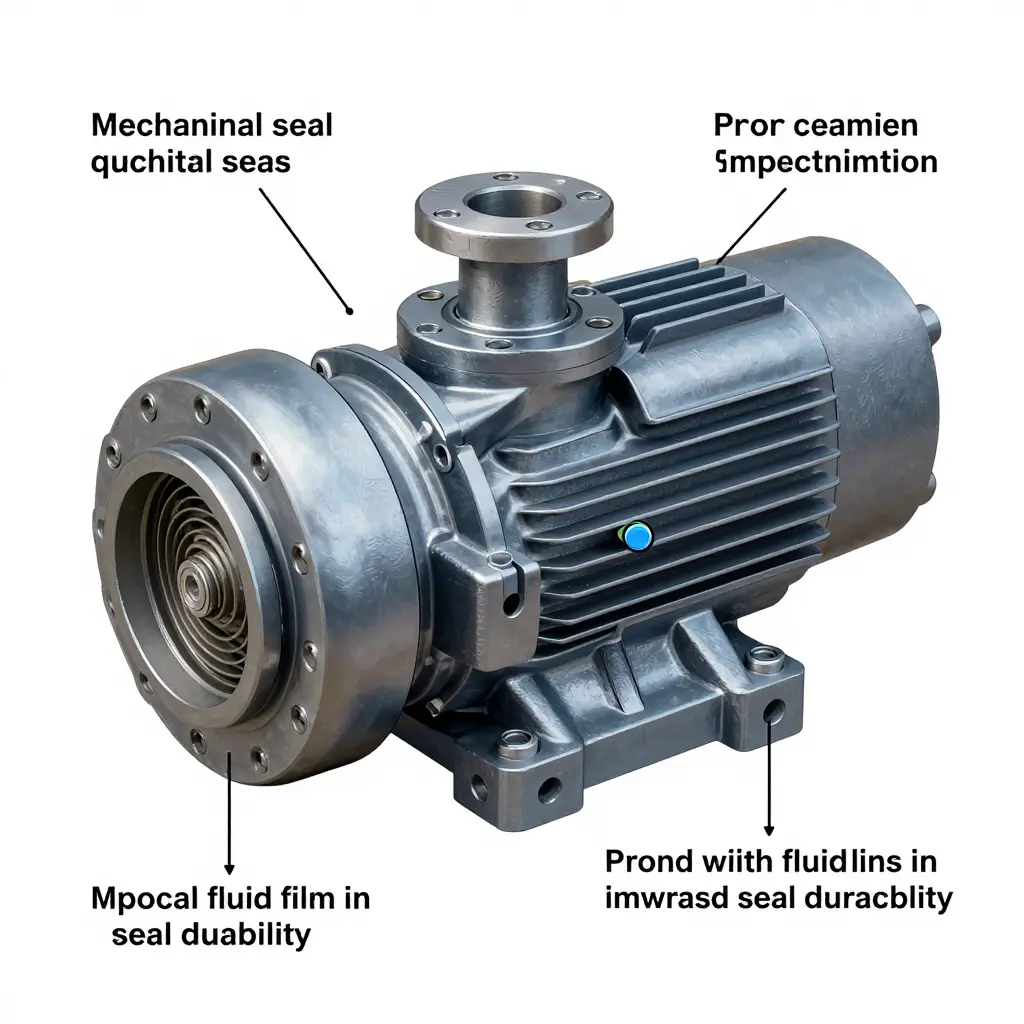
Why Centrifugal Pump Seal Failures Begin With Lubrication
A centrifugal pump seal rarely fails from simple wear. In most field cases, the root cause comes back to lubrication — the breakdown of the thin fluid film that separates the sealing faces. Understanding why a seal lasts means understanding that film, and any maintenance plan built only around wear will keep producing the same failures.
What a Mechanical Seal Actually Is
A mechanical seal keeps fluid from escaping where a rotating shaft passes through a stationary pump housing. Two extremely flat faces — one turning with the shaft, one fixed — are pressed together by spring force and hydraulic pressure. In normal operation the faces never touch. A microscopic film of process fluid, or a barrier fluid, rides between them, lubricating the faces and holding leakage to a controlled weep.
Why Lubrication, Not Wear, Drives Failure
Lubrication here means keeping that fluid film at the right thickness, pressure, and temperature. When the film collapses — from dry running, vaporization, contamination, or overheating — the faces contact each other directly. Friction then generates heat fast, and thermal cracking and adhesive wear can destroy a seal within minutes. The worn faces are a symptom, not the cause.
What This Article Covers
The sections below cover the lubrication mechanisms inside a mechanical seal, the operating conditions that disrupt the fluid film, the failure patterns that point back to lubrication loss, and the steps that protect the film and extend seal life.
The Lubrication-First Principle
A centrifugal pump mechanical seal does not stay reliable because of hardness or wear resistance. The governing rule is lubrication first: the seal works only while a continuous, stable fluid film separates the rotating and stationary faces.
Seal faces are the two precision-lapped surfaces that form the primary sealing interface. One rotates with the pump shaft; the other is fixed to the stationary gland. In normal operation these faces do not touch directly.
Fluid film is the microscopic layer of pumped liquid, or barrier fluid, in the gap between the faces. It is usually measured in microns, but that film carries the mechanical load, conducts away the heat that friction generates, and provides the actual sealing barrier.
Lubrication regime describes the state of that film: full-film (hydrodynamic or hydrostatic), mixed, or boundary. In full-film conditions the faces remain completely separated. In mixed and boundary regimes, asperities touch and face wear accelerates.
Film stability matters more than material hardness, because hardness only resists damage after contact has begun. A stable film prevents contact in the first place. The hardest face materials fail early once the film collapses, vaporizes, or becomes contaminated, while softer materials in a well-maintained full-film regime can last for years.
Sustained seal performance depends on the continuity of the lubricating film, not on the hardness of the faces.
The table separates the two failure modes so a maintenance team can tell the origin from the symptom. Read it left to right and a pattern shows up: almost every wear signature on a seal face traces back to a lubrication defect that arrived first.
Lubrication-Related vs. Wear-Related Seal Failure
| Comparison Criterion | Lubrication-Related Seal Failure | Wear-Related Seal Failure |
|---|---|---|
| Root Cause | Inadequate, contaminated, or wrong-viscosity lubricant; dry running; vaporization or loss of the fluid film between faces | Mechanical abrasion, particle entrapment, or adhesive/abrasive contact after the film has already broken down |
| Typical Symptoms | Rising face temperature, squealing or chattering, intermittent leakage that worsens under load changes, hot pump casing | Steady, progressive leakage, visible grooving or scoring, higher vibration, gradual performance decay |
| Seal Face Appearance | Heat checking, bluish discoloration, glazing, thermal cracking, localized blistering | Uniform circumferential scoring, deep grooves, material transfer, edge chipping |
| Time to Failure | Rapid, often minutes to hours once the film is lost | Slow, typically weeks to months of gradual degradation |
| Failure Sequence | Occurs first; establishes the dry or starved condition that enables contact | Occurs second; the physical damage is the consequence of an already-broken lubricant film |
| Corrective Action | Restore correct lubrication: verify flush/barrier fluid flow, viscosity, filtration, and alignment of lubrication supply | Address the wear only after fixing lubrication, or the replacement seal will fail the same way |
| Diagnostic Indicator | Temperature and flow data on the flush line spike before any leak appears | Leak rate climbs after temperature has already been elevated for a period |
| Cost of Misdiagnosis | Low if caught early; a flush-line fix preserves the seal | High; replacing worn seals without correcting lubrication repeats the failure cycle |
When a seal looks worn, ask what starved it before it wore. The lubrication defect is almost always the earlier event, and the one worth correcting. Blaming the visible wear just schedules the next failure.
How Seal Faces Depend on a Fluid Film
Mechanical seal faces are not built to run in dry contact. They run on a microscopic fluid film that separates the rotating face from the stationary one, and the seal lasts only as long as that film survives changing operating conditions. The lubrication regime — boundary, mixed, or full-film — describes the state of the film.
Boundary Lubrication
In boundary lubrication, the fluid film thickness is only a few molecules deep, often less than 0.1 micrometer. Asperities on the two faces make contact, and a thin, chemically bonded layer of fluid or additive carries the load. Friction and heat rise sharply, but the seal survives because surface-active molecules prevent metal-to-metal welding.
Mixed Lubrication
Mixed lubrication is the transition zone. Part of the load goes through surface contact and part through the fluid, and film thickness grows to roughly the height of the surface roughness. This regime is common during startup, shutdown, and low-speed operation, when the seal chamber cannot yet generate enough hydrodynamic pressure to separate the faces.
Full-Film (Hydrodynamic) Lubrication
At higher speeds, the geometry of the faces and the viscosity of the fluid generate a pressure wedge that lifts them apart. This is full-film (hydrodynamic) lubrication, with the fluid film thickness on the order of a few micrometers and no asperity contact. Wear is nearly zero and seal life is longest.
What Controls Film Thickness
Three variables decide which lubrication regime prevails, and how thick the film becomes:
- Pressure: A higher seal chamber pressure increases the closing force on the faces, squeezing the film thinner and pushing the seal toward boundary or mixed contact.
- Temperature: Rising temperature lowers fluid viscosity, so a thinner, less viscous fluid carries less hydrodynamic load and the film shrinks. Excess heat can vaporize the fluid and collapse the film entirely.
- Fluid properties: Viscosity, vapor pressure, and lubricity set the film’s load-carrying capacity. Low-viscosity or low-lubricity fluids such as hot water and light solvents form thin, weak films and are the hardest to seal.
Seal face life is a lubrication problem before it ever becomes a wear problem, and the fluid film thickness inside the seal chamber is the best early indicator of which failure mode is approaching.
Seal Face Lubrication: The Film That Separates the Faces
This schematic shows the principle behind most centrifugal pump seal failures: the film, not the face material, decides how long the seal lasts. In a mechanical seal, a rotating face and a stationary face are pressed together under spring and hydraulic load. If those two faces touched directly, friction and heat would destroy them within minutes.
The key element is the thin lubricating fluid film between the faces. This microscopic layer of process fluid keeps the faces apart, carries the load, and allows nearly frictionless relative motion. Lose the film and the faces make hard contact.
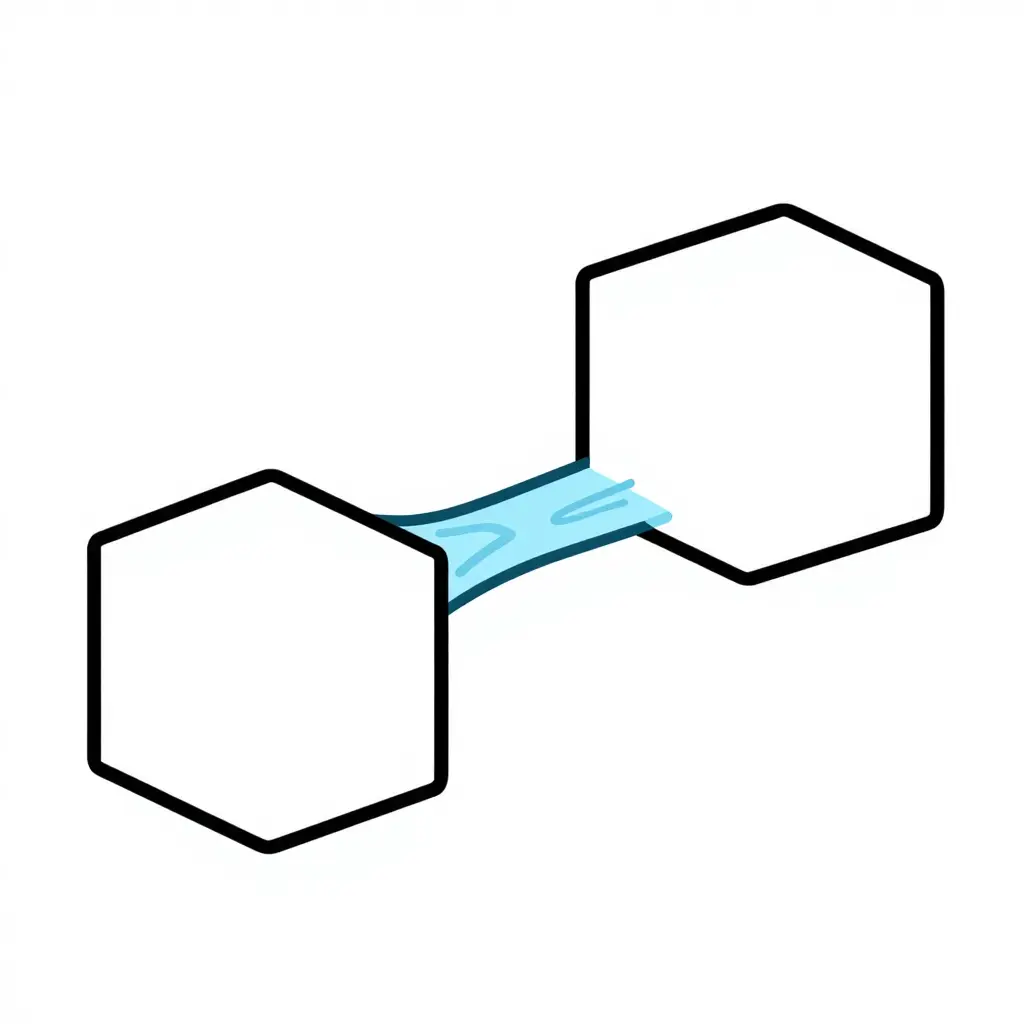
- Rotating face turns with the shaft and drives the fluid between the faces.
- Stationary face stays fixed to the housing and reacts against the rotating face.
- Fluid film provides the crucial separation that prevents metal-to-metal contact.
Diagnosing a seal problem at its true source starts here.
Why “Seals Just Wear Out” Misdiagnoses the Problem
The idea that a seal simply wears out treats failure as inevitable aging, as if the part had a fixed service life. That framing hides what actually happens. In most centrifugal pump seal failure cases, the marks on the seal faces are not the root cause but the last evidence of an earlier breakdown. By the time anyone inspects the damaged faces, the damaging event has already happened upstream.
Seal wear is a symptom, not a starting point. The mating faces only generate friction heat and lose material after the lubricating film between them collapses. While a stable fluid film separates the faces, wear rates stay low and predictable. Remove the film and the faces touch directly, and material starts to transfer and break away.
The film usually fails first
Three upstream conditions typically destroy the lubricating film before any visible wear appears:
- Dry running: when the pump loses prime, runs against a closed discharge, or drains its casing, no liquid sits between the faces. With nothing to carry heat away, the faces overheat within seconds and begin to score.
- Vaporization: a hot fluid can flash to vapor at the seal faces where local pressure drops. Vapor does not lubricate, so the faces run essentially dry even though liquid is present in the system.
- Loss of film: contamination, a drop in viscosity, or low face pressure can thin the film until the faces touch. The resulting wear marks are later mistaken for an age problem.
Conclusion
Visible seal wear is the result of lubrication breakdown, not its cause. Replacing the worn faces alone leads to repeated replacements and recurring centrifugal pump seal failure. The useful diagnosis looks upstream, at dry running, vaporization, and film loss, because those conditions decide whether the seal ever had a chance to wear normally.
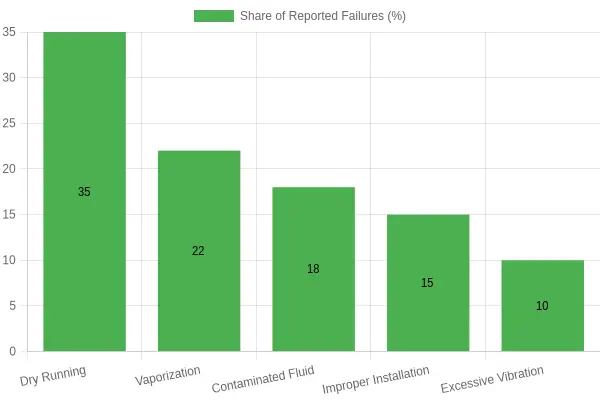
The chart above breaks down the most frequently reported causes of mechanical seal failure, each category as a share of reported failures. Dry running and vaporization appear near the top; contaminated fluid and improper installation fall in the middle; vibration, often the first suspect in troubleshooting, sits at the bottom.
The six failure modes below cover most of what shows up in the field. Each one degrades the thin fluid film between the faces, and most failures trace back to one or more of them.
-
Film collapse from dry running
Dry running removes the fluid film that separates the rotating and stationary faces, forcing direct face-to-face contact. The result is rapid heat buildup and material damage before any visible leakage appears. -
Vaporization at the seal faces
When the local pressure drops below the vapor pressure of the process fluid, it flashes to vapor right at the faces. The vapor eliminates the load-carrying film, so the seal keeps running without adequate lubrication. -
Contamination disrupting the film
Abrasive particles or suspended debris interrupt the continuous film between the faces. Contamination accelerates face wear and can score the sealing surfaces over time. -
Wrong flush plan
An unsuitable flush arrangement supplies the wrong fluid, flow rate, or pressure to the seal chamber. A mismatched flush plan undermines film stability and is a frequent root cause of failure. -
Inadequate seal chamber pressure
Low seal chamber pressure lets the process fluid vaporize and prevents a stable film from forming. Keeping the pressure slightly above the vapor pressure holds the lubricating fluid liquid across the faces. -
Heat-induced viscosity loss
Elevated temperatures reduce fluid viscosity, thinning the film until it can no longer support the applied load. This mechanism is especially common in high-temperature or poorly cooled services.
Across all six modes the pattern is the same: the film fails first, and the visible seal damage follows as a symptom.
Heat, Vaporization, and the Collapsing Lubricating Film
Every mechanical seal depends on a whisper-thin film of liquid trapped between its faces. That film separates the rotating and stationary faces and carries away the friction heat they create. Once it turns to vapor, the seal loses its lubrication even though the shaft keeps spinning.
Mechanical friction and fluid shear generate heat as the faces rub. That heat raises the temperature of the fluid inside the seal chamber, pushing it closer to its boiling point at whatever pressure surrounds it.
The vapor pressure margin is the gap between the fluid’s vapor pressure at the seal face temperature and the actual pressure in the seal chamber. Keep the margin comfortably positive and the fluid stays liquid, so the film survives. Squeeze it toward zero and vaporization begins at the face.
Once vapor pockets form, they stop acting like a lubricant. Gas carries far less heat away than liquid, local temperatures spike, the pocket expands, and the film breaks into an unstable boiling mixture. Dry running follows close behind.
Why a Running Pump Can Still Starve Its Seal
A pump can sound perfectly normal, hold discharge pressure, and move product while the seal interface quietly starves. The impeller keeps pumping and the faces keep turning, but the film between them has already flashed to vapor.
Watch for a rising seal face temperature against a steady pump discharge, fluid sitting near its boiling point inside the seal chamber, a vapor pressure margin drifting toward zero, and seal life shrinking with no obvious abrasive wear.
The faces still touch, so wear marks do appear, but wear is the symptom here. The trigger behind most centrifugal pump seal failure is the loss of the liquid film, long before the faces show damage.
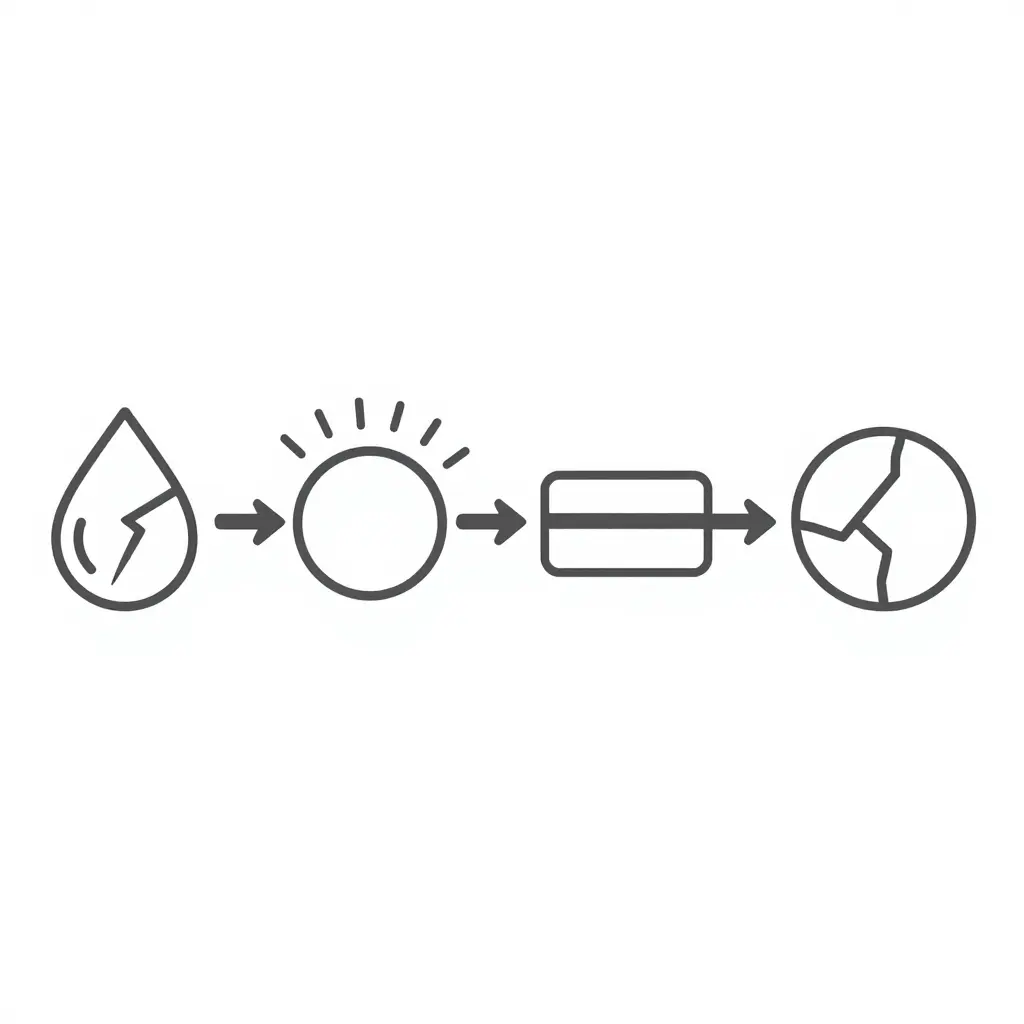
Figure: The lubrication breakdown chain. From left to right, each shape marks one link in the sequence: a broken fluid film raises friction and heat, heat drives face wear, and the chain ends in catastrophic seal face damage. Seal faces rarely fail on their own. They fail because the lubricating film between them collapsed first.
Maintenance and Prevention Best Practices
Because lubrication, not wear, drives most seal failures, routine pump maintenance should target the conditions that keep a fluid film intact at the seal faces. Four practices carry most of the load: choosing the right flush plan, holding seal chamber pressure, watching temperature, and controlling contamination.
Select the Correct Flush Plan
Match the flush plan to the fluid and the duty. An API Plan 11 recirculation suits clean, cool liquids, while Plans 21 and 23 add cooling for hot services. For dirty or crystallizing products, Plan 32 injects a clean external flush, while Plan 53 supplies a clean barrier fluid from a pressurized reservoir on a dual seal. Verify that the plan actually delivers flow to the seal faces at every operating point, including low-flow and start-up conditions. A plan selected from a datasheet and never field-verified is a common cause of dry running.
Maintain Seal Chamber Pressure
Keep seal chamber pressure above the vapor pressure margin recommended for the seal, and keep it stable. In dual seals, the barrier pressure should generally exceed the process pressure so the faces run on clean, lubricating fluid. Add or adjust a throttle bushing or pressure control valve when chamber pressure drifts. Record the value at each inspection so trends surface before the faces score.
Monitor Temperature
Keep the seal chamber temperature inside the range the seal was designed for. Rising temperature thins the lubricating film and accelerates chemical attack on elastomers. Fit a thermocouple or resistance temperature detector where feasible, and trend the readings. Act on a steady climb rather than waiting for a trip.
Control Fluid Contamination
Solids, air, and moisture disrupt the fluid film that protects the faces. Inject clean flush fluid, use filtration or cyclone separators where appropriate, and keep the flush line sealed against dirt ingress. Moisture in the barrier reservoir calls for a change-out, not just a top-up.
Action-Oriented Summary
| Practice | Target / Check | Frequency | Action If Out of Range |
|---|---|---|---|
| Flush plan flow | Continuous flow at all duty points | Weekly | Clear restriction, re-verify plan selection |
| Seal chamber pressure | Above vapor margin, stable | Weekly | Adjust valve, add throttle bushing |
| Seal chamber temperature | Within seal design range | Daily trend review | Increase cooling, confirm flush flow |
| Contamination | Low solids, air, and moisture | Monthly | Replace barrier fluid, check filtration |
| Face inspection | Even, lubricated face wear | On shutdown | Rebuild mechanical seal, restore lubrication |
Keep clean fluid moving, keep pressure stable, keep temperature down, and treat every reading as a leading indicator. Protecting lubrication prevents the failure before wear ever begins.
Share of Seal Failure Modes by Category
When a centrifugal pump seal fails, the wear pattern usually takes the blame. The records tell a different story. Across maintenance records, most seal failures trace back to how the seal was lubricated, installed, contaminated, or operated, not to the elastomer or face material simply wearing out.
The doughnut chart below gives the approximate share of the major failure mode categories. Lubrication-related failures — dry running, insufficient barrier fluid, or starved faces — dominate, which supports the point that seals usually die from the environment around them rather than from any inherent material weakness.
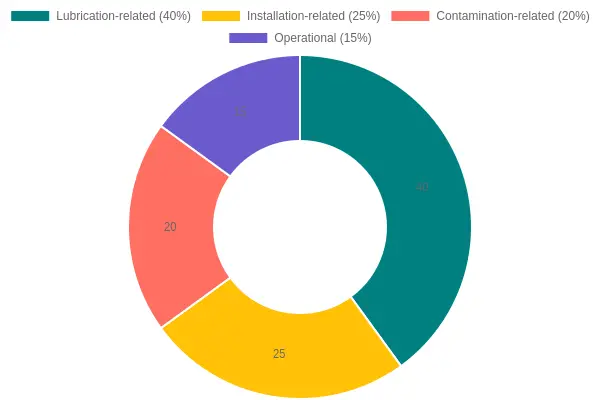
| Failure Mode Category | Approximate Share | Primary Root Cause |
|---|---|---|
| Lubrication-related | 40% | Dry running, vaporization, barrier fluid loss |
| Installation-related | 25% | Misalignment, incorrect face loading, damaged faces |
| Contamination-related | 20% | Abrasive particles, corrosion products, dirty flush |
| Operational | 15% | Overpressure, temperature spikes, off-design duty |
Read clockwise from the largest segment: lubrication and installation together account for roughly two-thirds of all failures. That is why a reliability program should start with the fluid film and the mounting procedure, before shopping for a “better” seal.
Frequently Asked Questions About Centrifugal Pump Seal Failure
Are seal failures always caused by wear?
No. Most centrifugal pump seal failure events begin with a breakdown in the fluid film rather than physical abrasion. Once the film between the faces is lost, friction and heat rise sharply, and material removal is the consequence rather than the cause. Discoloration, heat checking, or thermal cracking on the faces confirms that wear followed a lubrication problem instead of leading it.
How does lubrication affect seal life?
A stable fluid film separates the rotating and stationary faces, carries away heat, and minimizes direct contact. With adequate lubrication, face temperatures stay controlled and seal wear progresses slowly and predictably. Poor film formation accelerates face degradation, so even a correctly installed seal can fail early under dry or starved conditions.
What symptoms indicate film loss?
Rising seal chamber temperature, increased leakage, squealing or chattering, and rapid face discoloration all point to a collapsed fluid film before visible damage appears. Watching these signals lets a maintenance team intervene before the seal reaches catastrophic failure.
How do you diagnose lubrication failure versus material wear?
Start with the face pattern. A dry, heat-cracked, or blistered surface points to lubrication starvation, while uniform grooving and material loss point toward abrasive seal wear. Cross-check pump operating conditions, flush flow, and temperature records to confirm which mechanism is active. The operating history is more reliable than the faces in isolation.
Can changing the seal material stop repeat failures?
Rarely on its own. If the root cause is film loss, a harder or more chemically resistant face material fails the same way at a later date. Correct the flush flow, heat generation, and fluid supply, and you address the condition that drives centrifugal pump seal failure.
Do operating conditions contribute to seal failure without obvious wear?
Yes. Dry running, vaporization at the faces, and excessive heat can degrade a seal with little visible material loss. They reduce the film thickness that lubrication depends on, so the seal fails through thermal and mechanical stress. Review pump duty, suction conditions, and environmental controls to find these hidden contributors.
Why is lubrication considered the starting point for seal failure?
Seal faces rely on a thin, stable film to stay separated and cool. When that film is compromised, the resulting friction sets off a chain of events that ends in visible seal wear and leakage. Treating lubrication as the primary control point prevents most failures before damage begins.
Conclusion: Diagnosing With Lubrication First
When a centrifugal pump seal failure occurs, the instinct is to replace the seal and move on, which treats the symptom rather than the cause. A correct diagnosis starts with lubrication conditions, before assuming mechanical wear is to blame. Seal faces rarely fail in isolation; they fail because the film meant to protect them was starved, contaminated, or overheated long before any visible damage appeared.
Key Takeaways
- Wear is usually a symptom, not a root cause. Face damage often reflects a lubrication breakdown that started earlier in the process.
- Lubrication quality drives seal life. The right fluid film, at the right temperature and pressure, keeps faces separated and cool.
- Contamination and dry running accelerate failure. Vapor pockets, debris, and inadequate flushing quietly erode seal integrity.
- Investigate before you replace. Checking lubrication conditions first avoids repeat failures and unnecessary parts costs.
Why This Matters in Practice
For engineers, technicians, and pump manufacturers, a lubrication-first approach means more reliable equipment and lower operating costs. It moves pump maintenance from reactive part-swapping to proactive problem-solving. Confirming that the lubricating environment is healthy before blaming wear extends seal life, reduces unplanned downtime, and grounds the maintenance strategy in evidence rather than assumption. The result is a pump system that runs longer, fails less, and makes more sense to the people who keep it running.