
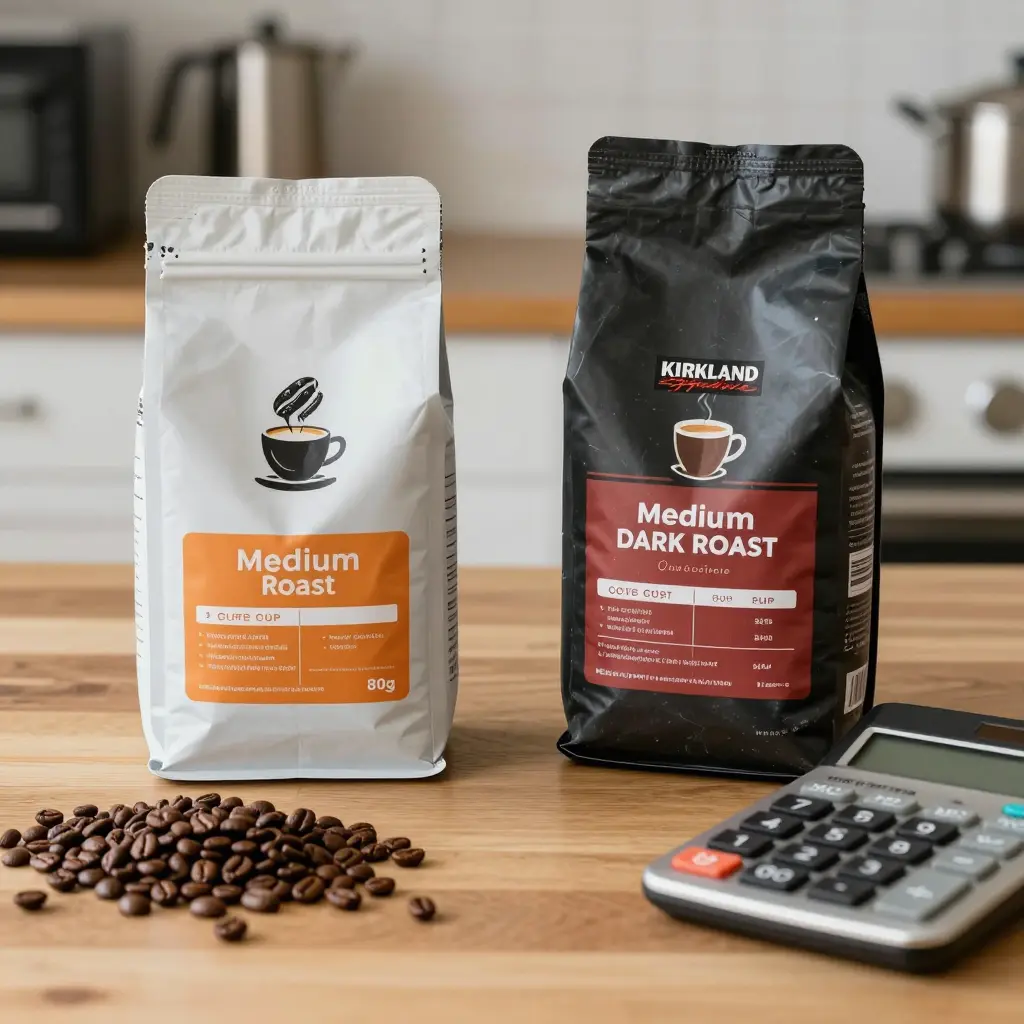
Kirkland Signature Coffee: Medium Roast Versus Dark Roast, Grind Size, and Cost Per Cup
Kirkland Signature coffee is what many Costco shoppers grab when they want dependable beans without boutique prices. The line comes in large bags and cans, and it covers everyday drip, French press, and espresso. Three things decide whether a particular bag works for you: the roast, the grind, and the real cost per cup.
Roast level sets flavor, acidity, and body, and it also decides how forgiving the coffee is to brew. Grind controls extraction – a French press wants a very different particle size than an espresso machine, and pre-ground versus whole bean changes what you can do at home. Cost per cup is the number most people skip, yet bulk pricing only means something once you divide the bag price by the cups it actually brews. For a closer look at the darkest option in the lineup, see this breakdown of the Kirkland Signature French roast.
Kirkland Signature Medium Roast: The Balanced, Versatile Cup
Medium roast lives between the bright, tea-like lift of a light roast and the smoky, bittersweet punch of a dark one. Kirkland Signature medium roast settles into that middle ground, so nothing in the cup is pushed to an extreme. Drink it black or with cream; either way it stays easy to like.
What to expect in the cup
- Aroma: Sweet and toasty, with nutty and milk-chocolate notes and a faint dried-fruit hint.
- Flavor: Caramel, cocoa, and roasted nuts, plus a mild citrus edge and very little bitterness.
- Body: Medium weight and smooth, coating the palate without turning heavy.
- Acidity: Moderate and balanced – lively enough to stay interesting, never sharp or sour.
The best brewing method for medium roast
An even-tempered bean like this one works with almost any method. Drip and pour-over show off its clarity and sweetness, a French press plays up the body, and cold brew turns the acidity down into a rounded, chocolatey concentrate. It will even pull a serviceable espresso shot without drowning the milk in a latte.
Why medium roast is the balanced, versatile pick
Roasters sell medium roast as the “just right” option because it keeps some origin character while taming the raw acidity that turns casual drinkers off light roasts. For Kirkland Signature, that balance makes the bag a safe everyday buy: forgiving to brew, easy to drink plain, and flexible enough to serve with food. If you want more smoke and heft, compare it against a Kirkland French roast coffee instead.
Kirkland Signature Dark Roast Profile: Bold Flavor and Deep Intensity
A dark roast’s character is decided in the drum, not on the farm. Kirkland Signature dark roast keeps its beans in the roaster longer and hotter than the medium roast, and that extra time and heat reshape the flavor, aroma, body, and intensity of every cup.
Flavor and Aroma
The longer roast drives sugars into deep caramelization, so dark chocolate, toasted almond, and a faint smoky sweetness take over. Bright, fruity acidity drops into the background, and the aroma turns heavier and more resinous, closer to bakers’ chocolate than the floral lift of a lighter bean. The result is an assertive, rounded cup with little of the sharp citrus edge lighter roasts often show.
Body and Intensity
Extended roasting pulls moisture out of the bean and brings oils to the surface, which builds a full, syrupy body and a weighty mouthfeel. Intensity runs high, so the flavor holds up to milk, sugar, or ice without disappearing. The finish is long and slightly bittersweet rather than crisp.
Low Acidity and Roast Level
Many of the natural acids break down during a long roast, which is why this coffee reads as low-acid and smooth rather than tangy. The same roast level mutes origin-specific nuance in exchange for consistency and depth – the trade many everyday drinkers are happy to make.
Best Brewing Methods
- French press and cold brew, which lean into the heavy body and smoky sweetness
- Espresso and moka pot, where the deep, chocolatey notes cut through milk
- Standard drip, if you prefer a more diluted, easier-going cup
Who Prefers It
This one suits anyone who wants a strong, predictable, full-bodied cup and treats coffee as a daily habit rather than a delicate tasting exercise. If that deeper style is what you’re after, our Kirkland French roast coffee review covers a closely related darker profile worth comparing.
Medium Roast vs. Dark Roast: Side-by-Side
The choice between the two Kirkland Signature roasts comes down to how you want your coffee to taste and feel. The table below lays out the differences at a glance, whether you pour-over in the morning or pull espresso shots in the afternoon. For a deeper dive into the bolder side of the lineup, see this Kirkland French roast review.
| Attribute | Medium Roast | Dark Roast |
|---|---|---|
| Appearance | Medium brown, dry surface | Dark brown to near-black, oily sheen |
| Flavor Notes | Balanced, nutty, cocoa, mild caramel | Bold, smoky, bittersweet, dark chocolate |
| Aroma | Toasty and sweet, more origin-forward | Intense, smoky, roast-dominant |
| Body | Medium, smooth | Full and heavy |
| Acidity | Moderate to lively | Low, muted |
| Caffeine Perception | Lighter, brighter lift | Heavier, richer feel (actual caffeine similar) |
| Best Brewing Methods | Drip, pour-over, French press | Espresso, French press, cold brew |
| Ideal Drinker | Fans of balanced, layered flavor | Those who love bold, robust, low-acid cups |
Quick takeaway: Medium roast keeps more of the bean’s natural character, while dark roast leans on the roaster for a heavier, smokier profile. Caffeine is close either way, so the real difference is taste, body, and acidity.
Coffee Grind Guide: Matching Grind Size to Your Brew Method
Brewed coffee is roughly 98% water, so how you prepare it matters almost as much as the beans you buy. Whether you reach for Kirkland Signature medium roast or its darker sibling, grind size is the biggest lever you control at home. Get it right and you unlock sweetness and clarity; get it wrong and you taste either sourness or bitterness.
Why Grind Size Controls Flavor
Grind size determines how much surface area the water can reach. Finer particles expose more coffee and speed up extraction; coarser particles slow it down. Extraction is just the process of dissolving sugars, acids, and aromatic compounds out of the grounds and into your cup.
Under-extracted coffee tastes sharp, sour, and thin. Over-extracted coffee tastes bitter, dry, and hollow. The sweet spot sits in the middle, where body meets bright acidity.
Too-Fine vs. Too-Coarse: What You Will Taste
When the grind is too fine, water struggles to pass through and over-extracts the coffee, leaving a harsh, bitter, sometimes chalky cup. When it’s too coarse, water rushes past without pulling enough flavor, and you get a weak, sour, watery result. Change one variable at a time, then taste again.
Matching Grind Size to Brewing Method
Use this quick guide to line your grind up with your gear.
| Grind Size | Texture | Best Brewing Methods | Typical Extraction Time |
|---|---|---|---|
| Extra fine | Powder-like | Espresso, Moka pot | 20-30 seconds |
| Fine | Table salt | Pour-over, AeroPress | 2-4 minutes |
| Medium | Sand | Drip machine, flat-bottom pour-over | 4-6 minutes |
| Medium-coarse | Coarse sand | French press, Clever dripper | 4-5 minutes |
| Coarse | Sea salt | Cold brew, percolator | 12-24 hours |
Practical Tips for Kirkland Signature Drinkers
Pre-ground Kirkland Signature coffee is convenient, but it’s usually sized for a standard drip machine. If you brew another way, a burr grinder gives you far more control than a blade grinder, which leaves uneven particles behind. To see how roast choice interacts with these variables, explore our Kirkland French roast coffee review. Start with the suggested grind for your method, then adjust by taste until the cup lands where you want it.
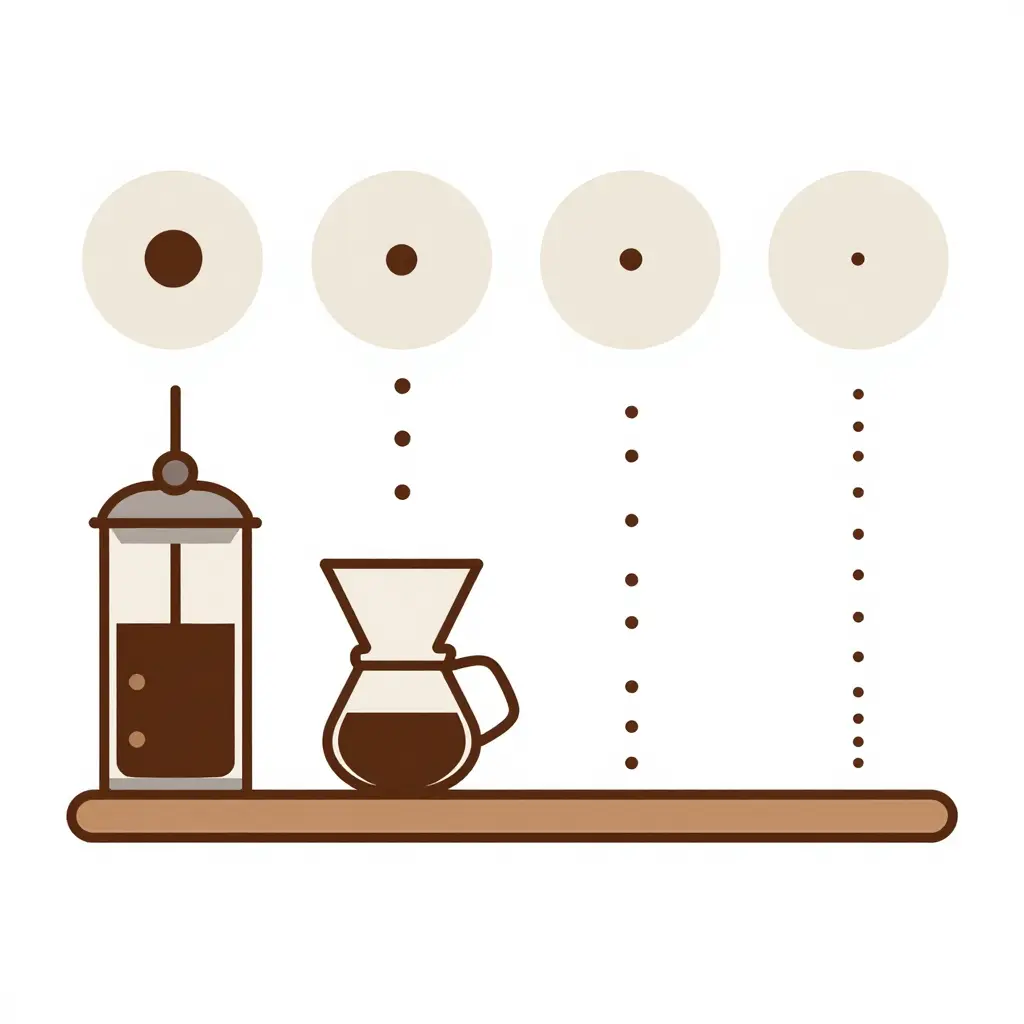
Use this quick visual as your cheat sheet: match your grind to your brewer, and whether you go medium or dark roast, the coarse-to-fine principle stays the same.
Cost Per Cup Breakdown: Medium Roast vs. Dark Roast
The good news that keeps Kirkland Signature coffee in so many kitchens is the cost per cup. But the number on the shelf tag isn’t the number that matters – what matters is how far one bag stretches once you start scooping.
The formula takes about ten seconds to run:
Price per pound ÷ servings per bag = cost per cup
Here it is with real numbers. A typical two-pound bag of Kirkland Signature medium roast runs roughly $18, or about $9.00 per pound, though prices vary by warehouse. A standard coffee-to-water ratio (the “golden ratio”) is one to two tablespoons of grounds per six-ounce cup, so call it 10 grams for a moderate brew. One pound is 454 grams, which makes a two-pound bag about 907 grams, or roughly 90 cups at standard strength.
| Roast | Bag Size | Price per Pound | Servings per Bag (standard) | Cost Per Cup |
|---|---|---|---|---|
| Medium Roast | 2 lb | ~$9.00 | ~90 | ~$0.20 |
| Dark Roast | 2.5 lb | ~$8.00 | ~113 | ~$0.18 |
| Dark Roast (strong) | 2.5 lb | ~$8.00 | ~63 | ~$0.32 |
Why Dark Roast Usually Wins on Price
Dark roast beans stay in the roaster longer, so they lose more moisture and weigh less per bean, and Kirkland often packs its French roast in a larger bag. The lower price per pound pulls the per-cup figure down. For a closer look at how that roast performs in the cup, see our Kirkland French roast coffee review.
How Grind and Strength Shift Your Real Numbers
The math above assumes a middle-of-the-road setup, but two variables move it fast:
- Grind: A fine grind for espresso or a moka pot packs more grounds into each shot, while a coarse grind for French press needs more coffee per brew. Both cut your servings per bag.
- Strength: A weak, drip-style cup might use only 8 grams, pushing you past 110 servings. A strong cup at 18 grams nearly halves that.
The smartest move is to weigh your coffee once with a cheap kitchen scale. That single habit turns a guess into an accurate cost per cup, and it tells you whether the extra scoop is worth it.
Brewing Tips for Kirkland Signature Coffee
A few small changes to your routine will pull more of the richest, most balanced flavor out of every bag, whether you buy medium or dark roast. To see how a bolder option performs, check our Kirkland French roast coffee review.
- Keep your water temperature between 195°F and 205°F. Water that is too cool under-extracts the coffee, while fully boiling water scalds the grounds and adds bitterness.
- Aim for a coffee-to-water ratio of roughly 1:15 to 1:17 by weight, which means about one gram of coffee for every fifteen to seventeen grams of water.
- Match your grind consistency to your brewing method: coarse for a French press, medium for drip machines, fine for espresso.
- Store your coffee in an airtight, opaque container kept in a cool, dark place. Skip the refrigerator unless the beans are sealed against moisture and odors.
- Buy whole beans and grind them just before brewing whenever possible. Pre-ground coffee loses its aromatic oils far more quickly.
- Use freshly filtered water. Chlorine and leftover mineral buildup can flatten the taste of even a high-quality bean.
- Rinse your paper filter and preheat your mug or carafe with hot water so the coffee stays warm instead of cooling the moment it is poured.
- Clean your grinder and brewer regularly. Stale oils left behind can taint the flavor of every subsequent batch.
Consumer Reception and Value: What a Kirkland Signature Coffee Review Shows
Across buying communities, food blogs, and warehouse-club forums, one theme keeps coming up in Kirkland Signature coffee reviews: both roasts deliver more than the price tag suggests. Because the coffee sells in two- to three-pound bags, most shoppers judge it on everyday value rather than specialty-grade prestige, and that shapes how they rate it.
Broadly, the medium roast gets called smooth, balanced, and easy to drink, with gentle cocoa and nut notes that suit drip brewers and need no milk. The dark roast draws bolder words – smoky, intense, more bitter – and gets recommended for espresso or for anyone who adds cream or sugar. Neither is usually called bland, which is the usual fate of budget coffee, and that consistency is why the line stays in so many kitchens.
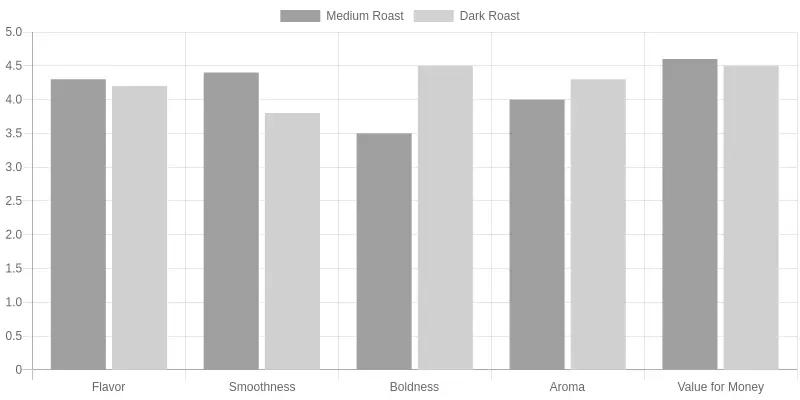
On value the agreement is even stronger. Even accounting for the occasional weak bag or uneven grind, the cost per cup stays well below most branded competitors, and buyers regularly report that the flavor holds up against name-brand roasts costing several times as much. The chart reflects that: both roasts cluster tightly on flavor and aroma, split mainly on smoothness versus boldness, and score nearly as high on value for money. For a deeper look at the darker side of the lineup, see this Kirkland French roast review.
Frequently Asked Questions About Kirkland Signature Coffee
Which roast has more caffeine, medium roast or dark roast?
Caffeine comes mostly from how you measure your beans, not the roast level. Dark roast beans lose moisture and density during a longer roast, so a scoop of dark roast can weigh less than the same scoop of medium. Measured by weight, though, the two deliver nearly identical caffeine. The real difference is how generously you scoop and how you brew.
Is medium roast or dark roast healthier?
Both are fine, and the differences are minor. A dark roast tends to contain slightly less chlorogenic acid, an antioxidant, because roasting breaks it down over time. You may also get marginally less caffeine by weight, since darker beans lose mass. For most drinkers, what you add matters more: cream, sugar, or flavored syrups.
What grind size should I choose for a drip machine or French press?
It depends on your brewing method and contact time. For a drip machine, use a medium grind about the texture of table salt so water flows evenly through the filter. For a French press, choose a coarse grind like sea salt; a fine grind can slip through the metal mesh and leave sediment in your cup. Grinding fresh just before brewing gets the best flavor from any bag.
How should I store Kirkland Signature coffee?
Keep it in an opaque, airtight container in a cool, dark place. Heat, light, moisture, and oxygen are what kill fresh flavor. Skip the freezer for daily-use beans, since repeated temperature swings bring condensation. Whole beans ground just before brewing hold their aroma far longer than pre-ground coffee.
How does the cost per cup compare to cafe coffee?
It’s dramatically cheaper. A large bag typically works out to roughly 15 to 35 cents per cup at home, while a single cafe latte or drip coffee often costs $3 to $6. Even after filters, water, and equipment, home brewing saves most people hundreds of dollars a year. If you want a richer, smokier option to compare, explore a full Kirkland Signature French roast coffee review.
Is Kirkland Signature coffee the same as Starbucks?
No. Some Kirkland Signature roasts are produced by well-known commercial roasters, but the blends are unique to Costco and made to Costco’s specifications rather than repackaged Starbucks. That said, several roasts lean toward the bold, dark flavors many Starbucks fans like, so it’s worth tasting a few to find your favorite.
Which Roast Wins? The Preference Breakdown
Read enough reviews, Reddit threads, and comment sections and one thing is clear: Kirkland Signature drinkers are not a monolith. Some want the smoother, more balanced medium roast; others happily trade a little brightness for the bold, smoky punch of a dark roast. A smaller but vocal group grabs whichever bag is on sale.
To show that split at a glance, here’s an illustrative snapshot of how roast preferences shake out among Kirkland Signature fans. Treat the figures as a rough summary of the discussion, not an official survey.
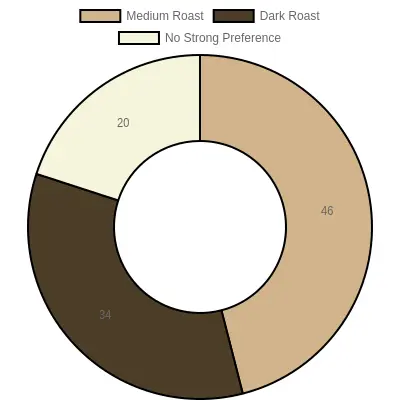
| Roast Preference | Share (Illustrative) |
|---|---|
| Medium Roast | 46% |
| Dark Roast | 34% |
| No Strong Preference | 20% |
How to read this chart: The medium roast holds the largest slice, which fits how often reviewers praise it as a crowd-pleasing everyday cup that works in drip machines, pour-overs, and cold brew. The dark roast keeps a solid chunk of loyalists who want a heavier body and a more intense finish – if that sounds like you, our Kirkland French roast coffee review digs into exactly that darker, smokier profile. The remaining fifth are flexible drinkers who are happy either way, which is a good place to be when you’re watching your wallet.
Note: These percentages are illustrative and summarize the general tone of the review discussion – not figures from an official Kirkland Signature or Costco study.
Final Verdict: Is Kirkland Signature Coffee Worth It?
For most coffee drinkers, yes. The medium roast wins on balance: a smooth, versatile cup that holds up black or softened with milk and sugar. The dark roast is bolder and smokier, a better fit for anyone who wants intensity or the rich depth of a French press. If that darker profile appeals to you, our full Kirkland French roast coffee review digs into the details.
On grind size, the rule of thumb is simple: match the grind to your brew method. Coarse for French press, medium for drip and pour-over, fine for espresso. Buying whole bean and grinding fresh gives you the biggest flavor upgrade for the least effort.
Then there’s cost per cup, where Kirkland Signature quietly undercuts most name-brand rivals while keeping quality consistent from bag to bag.
A Quick Recommendation by Drinker
- Everyday drip drinkers: medium roast, medium grind.
- Bold-flavor fans: dark roast, coarse grind for French press.
- Espresso lovers: dark roast, fine grind.
- Budget-focused buyers: either roast, since the cost per cup is hard to beat.
The case for the brand is plain: dependable quality, honest pricing, and enough variety for different palates. It doesn’t need hype.