

Understanding Calories in Coffee with Milk and Sugar
Have you ever wondered how the simple cup of coffee can become a calorie-laden indulgence when mixed with milk and sugar? As business owners, understanding this seemingly trivial aspect of office life can have significant implications for employee wellness and productivity. While many employees rely on their morning brew to kickstart their day and enhance their focus, the way they customize their coffee can drastically affect their overall caloric intake. With the average cup of coffee containing around 2 calories before any additives, adding just a tablespoon of sugar can spike that number to over 50 calories. Now, consider that many employees may consume multiple cups throughout the day, and the calories can quickly add up, leading to potential weight gain and decreased energy levels.
Promoting healthy coffee options, such as low-calorie sweeteners or milk alternatives, not only empowers your team to make better choices but can also enhance their productivity. A healthier workforce typically translates into fewer absences and greater efficiency. Furthermore, offering educational resources or your own company-wide wellness programs centered around nutrition, including coffee habits, can foster a culture of care and engagement. By prioritizing employee wellness through informed choices, you ultimately cultivate a more dynamic and effective workplace. In this article, we’ll delve deeper into the specifics of how different milk and sugar options can change the calorie content of your employees’ favorite morning ritual, ensuring that both you and your team can benefit from smarter coffee choices.
Discover healthier coffee options here or explore the nutritional benefits of coconut water to incorporate into your wellness initiatives!
Common Coffee Varieties and Their Characteristics
When it comes to coffee, there are numerous varieties, each with its own unique preparation and flavor profile. Below is a list of common coffee types along with descriptions of how they are typically served, especially with milk and sugar:
-
Espresso: A concentrated coffee brewed by pushing hot water through finely-ground coffee. Traditionally served without milk, but can be enjoyed with a small amount of steamed milk and sugar, creating a rich, bold drink with fewer calories.
-
Latte: Made with one or two shots of espresso and steamed milk, topped with a light layer of foam. Lattes can vary in calorie content based on the amount of sugar added, typically ranging from 100 to 200 calories with sweeteners.
-
Cappuccino: Similar to a latte but with a thicker layer of froth. Generally served with a sprinkle of cocoa or cinnamon. The calorie count varies but is generally under 100 calories without sugar.
-
Americano: Made by diluting a shot of espresso with hot water. It’s often served without milk, but adding a dash of milk and sugar can enhance its flavor, adding around 30-50 calories.
-
Flat White: Originating from Australia and New Zealand, this coffee consists of a small amount of espresso combined with microfoam (steamed milk with small, fine bubbles). Including sugar typically adds another 30-60 calories.
-
Mocha: A latte with chocolate syrup added, often topped with whipped cream. These are more indulgent and can range around 300-500 calories depending on the size and sugar content.
For business owners in food service, it’s important to understand these varieties not only for menu options but also for their caloric impact. You can read more about coffee options available at Costco in our costco coffee review. If you’re curious about what milk options to use for these coffees, you might find it helpful to check out our article about Kirkland A2 Milk.
By offering a range of coffee styles, you can cater to different customer preferences while being aware of their caloric additions based on your specific ingredients and preparation methods.
Nutritional Breakdown of Coffee, Milk, and Sugar
When it comes to beverages like coffee, the nutritional value can significantly change depending on the added ingredients. Here’s a detailed look at the calorie content and macronutritional breakdown of black coffee, different types of milk, and sugar.
1. Black Coffee
- Calories: Approximately 2 calories per 8 oz serving.
- Fat: 0 g
- Carbohydrates: 0 g
- Protein: 0 g
Black coffee is a low-calorie drink, primarily providing water and caffeine, with virtually no nutrients or calories. Its rich antioxidants have been linked to various health benefits, making it a popular choice for many health-conscious individuals.
2. Milk Variations
Coffee is often enhanced with milk. Here’s how different types of milk add calories and nutrients:
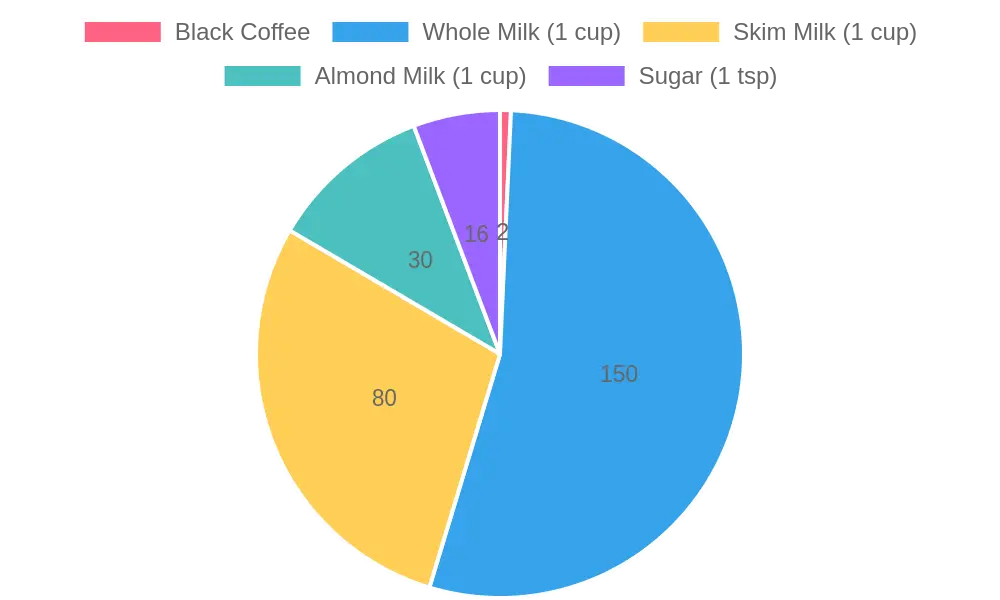
| Type of Milk | Serving Size (1 cup) | Calories | Fat (g) | Carbohydrates (g) | Protein (g) |
|---|---|---|---|---|---|
| Whole Milk | 8 oz | 150 | 8 | 12 | 8 |
| Skim Milk | 8 oz | 80 | 0.2 | 12 | 8 |
| Almond Milk | 8 oz | 30 | 2.5 | 1 | 1 |
- Whole Milk is the richest, providing a creamy texture and significant calories. It contains essential fats and proteins, which can contribute to a satisfying coffee experience.
- Skim Milk, on the other hand, offers a lower calorie option without fat, making it a favorite for those looking to cut calories while retaining some protein.
- Almond Milk is a popular dairy alternative, especially for those who are lactose intolerant or prefer a plant-based option. While lower in calories, it has fewer proteins compared to cow’s milk.
3. Sugar
Sugar is commonly added to coffee for sweetness, and its caloric contribution is significant:
- Calories: 16 calories per teaspoon.
Although sugar is a quick source of energy, it is also devoid of any vitamins or minerals. Users should consider moderation to avoid excessive calorie intake.
Coffee with Milk and Sugar
Combining these components results in varying calorie counts based on personal preference and proportions:
| Coffee Type | Calories |
|---|---|
| Coffee with Whole Milk & Sugar | 120 |
| Coffee with Skim Milk & Sugar | 80 |
These totals include
a basic serving of coffee, with milk and sugar added.
Conclusion
Understanding the nutritional breakdown of black coffee, milk, and sugar is vital for business owners, particularly those in the food and beverage sector. By offering options catered to diverse dietary preferences, such as whole, skim, or plant-based milks, you can meet the needs of a wider customer base. Adjusting sugar content can help balance flavors without overwhelming calorie counts.
For more insights on Costco’s product offerings, click here to explore their food section. This knowledge will empower you to create beverages not only appealing in taste but also aligned with the nutritional goals of your clientele.
Calorie Comparison of Coffee Types with Milk and Sugar
Coffee can be a surprisingly nuanced beverage when it comes to calorie content, especially when options like milk and sugar come into play. Below is a table that summarizes the calorie content for various coffee types, considering different types of milk and varying sugar levels. This information can be helpful for business owners looking to understand the calorie counts in menu options.
| Coffee Type | No Sugar | 1 Sugar Cube (16 cal) | 2 Sugar Cubes (32 cal) |
|---|---|---|---|
| Black Coffee | 2 cal | 18 cal | 34 cal |
| Coffee with 2% Milk | 120 cal | 136 cal | 152 cal |
| Coffee with Skim Milk | 80 cal | 96 cal | 112 cal |
| Coffee with Almond Milk | 30 cal | 46 cal | 62 cal |
Additional Resources
Understanding these calorie counts can assist businesses in menu planning and customer health choices. Enjoy experimenting with your coffee!
When you add milk and sugar to coffee, the calorie count increases significantly. For instance:
- Milk: A tablespoon (about 15 ml) of milk typically adds 10-20 calories depending on its type (whole, skim, etc.).
- Sugar: A teaspoon (approximately 4 grams) of sugar contributes about 16 calories.
Therefore, combining both ingredients-one tablespoon of milk and one teaspoon of sugar-can increase your coffee’s calorie content by about 26-36 calories.
While direct quotes from nutritionists were not available, experts recommend being mindful of these additions to monitor overall calorie intake.
“The calories in your coffee can add up quickly, especially with the addition of sugar and cream. Opting for lower-calorie alternatives can help keep your daily intake in check.” – A common sentiment echoed by nutritionists.
For more detailed discussions about coffee and its ingredients, you may want to refer to resources like Costco’s coffee review which covers various coffee options available.
The Impact of Calorie Intake on Business Performance
Understanding calorie intake-particularly from popular beverages like coffee with milk and sugar-can play a significant role in how business owners approach employee health and productivity. As studies continue to link nutritional choices to workplace performance, it’s essential for decision-makers to recognize the influence of caloric consumption on their workforce.
Caloric Content in Coffee and its Variations
When considering the most consumed beverage in workplaces across the globe, coffee stands out. However, the addition of milk and sugar can drastically affect its caloric value.
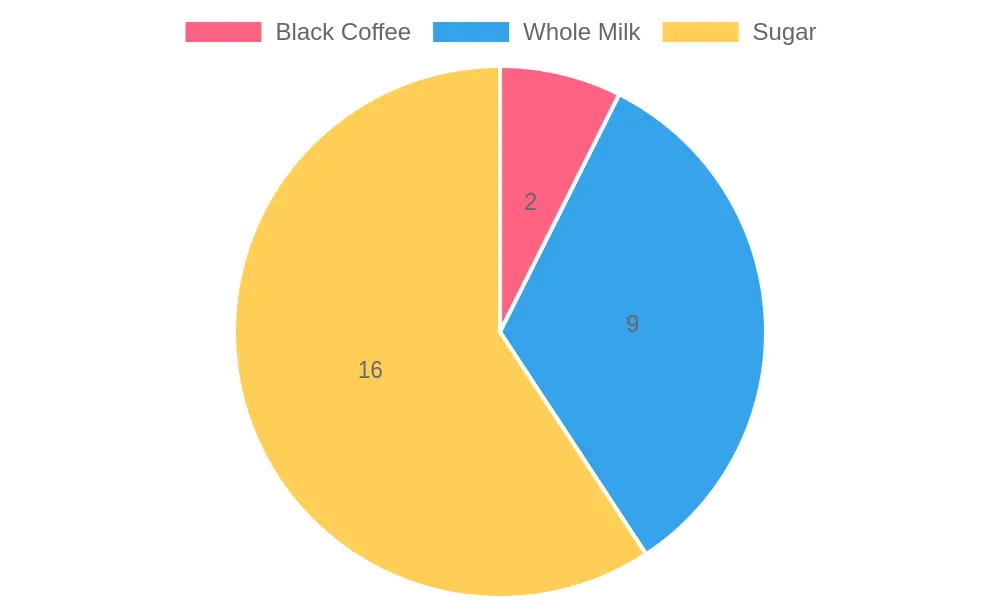
| Ingredient | Calories per Serving |
|---|---|
| Black Coffee | 2 calories (8 oz cup) |
| Whole Milk | 9 calories (1 tbsp) |
| Sugar | 16 calories (1 tsp) |
Source Data
As demonstrated, a standard 8-ounce cup of black coffee holds minimal calories at just 2. Yet, the addition of a tablespoon of whole milk adds around 9 calories, and each teaspoon of sugar introduces an additional 16 calories. This seemingly small difference can accumulate throughout a workday, influencing the total calorie intake of employees who regularly rely on coffee additions to boost their energy.
The Links Between Caloric Intake and Employee Productivity
Excessive intake of empty calories may lead to negative health outcomes, including obesity and other chronic conditions, which in turn can detrimentally affect professional performance. Conversely, insufficient calories can also lead to decreased concentration and energy levels. Understanding how calorie intake affects productivity is essential for business owners, as a well-nourished employee is often more engaged and effective at work.
In fact, according to research, employees report feeling fatigued and less focused when their diet does not meet nutritional standards. While precise statistics on how calorie intake correlates to workplace productivity can be challenging to pinpoint, the trends are clear: balanced nutrition promotes higher performance levels.
Addressing Employee Health through Beverage Choices
Business owners must consider how the beverage options they provide or the dietary habits they encourage can impact overall employee well-being. By offering healthier coffee options, such as lower-calorie alternatives or emphasizing moderation in sugary and creamy additives, employers can cultivate a more health-conscious culture.
For example, partnering with local cafes to provide lower-calorie coffee options or offering educational seminars about the health impact of various coffee additives can help guide employees towards better choices.
Conclusion
Ultimately, there is undeniably a connection between dietary choices-including the management of calorie intake from coffee-with the health and productivity of employees. As such, successful business strategies will increasingly involve promoting healthy eating and drinking habits in the workplace-what better way to start than by managing what fuels their daily grind? Emphasizing a healthier approach to everyday choices can lead to a more vibrant and productive workforce.
Additionally, businesses should invest in creating environments that promote nutrition education, thereby empowering employees to make healthier dietary choices. In doing so, they not only support the individual health of their workforce but also enhance overall business performance.
Coffee Consumption and Its Context
Coffee remains a staple in many workplaces, serving not only as a source of energy but also as a cultural phenomenon. Globally, coffee consumption continues to rise, with countries like Finland and the Netherlands ranking highly for per capita coffee intake. This trend indicates a deep-rooted appreciation and dependence on coffee among employees worldwide.
Health Benefits of Coffee
Moderate coffee consumption-typically regarded as 3-4 cups per day-has been linked to a variety of health benefits:
- Cognitive Function: Caffeine, the primary psychoactive substance in coffee, enhances alertness and concentration, contributing to improved task performance. By helping employees stay awake and focused, coffee can foster a more productive work environment.
- Mood Boosting: Coffee has been associated with improved mental health. Studies have shown that it may reduce the risk of depression and enhance overall mood, leading to happier employees and better teamwork.
However, it’s essential to note that the benefits may be negated when coffee is consumed with excess sugar and calorie-rich additives.
Impact of Milk and Sugar on Calories
When considering the calorie content of coffee, the addition of milk and sugar significantly alters its profile. Here are some key figures:
- A standard 8-ounce cup of black coffee contains about 2 calories.
- Adding 1 tablespoon of sugar contributes an additional 49 calories.
- Incorporating 1 tablespoon of whole milk adds approximately 9 calories. Other milk alternatives, like almond or skim milk, provide variable contributions.
| Item | Calories |
|---|---|
| Black Coffee (8 oz) | 2 |
| Sugar (1 tbsp) | 49 |
| Whole Milk (1 tbsp) | 9 |
| Almond Milk (1 tbsp) | 6 |
Thus, a cup of coffee loaded with sugar and cream can quickly become a high-calorie drink, which could contribute to weight gain and other health issues if consumed in excess.
Business Implications of Coffee Consumption
For business owners, understanding these dynamics is crucial for creating a supportive workplace. Here’s how coffee can play a pivotal role:
- Increased Productivity: Coffee can act as a performance enhancer. Employees who drink coffee often report heightened energy levels, which can lead to improved productivity. Providing easy access to coffee can support this effect in the workplace.
- Social Interactions: Coffee breaks often promote casual interactions among employees, fostering a collaborative culture. This can enhance teamwork, problem-solving, and overall job satisfaction.
- Employee Well-Being: Offering a coffee-friendly environment can reflect a company’s commitment to employee well-being. However, it’s important to balance this by offering healthier options and educating employees about the effects of excessive sugar and calories from coffee drinks.
Risks of Over-Consumption
While coffee has its benefits, over-consumption can lead to adverse health effects:
- Anxiety and Restlessness: High caffeine intake may lead to increased anxiety levels among employees, impacting their performance negatively.
- Sleep Disruption: Consuming coffee late in the day might affect sleep patterns, leading to decreased productivity due to tiredness the following day.
Business owners should consider these factors when contemplating coffee policies within their workplace. Creating designated coffee breaks can capitalize on the benefits while keeping consumption within healthy limits.
Conclusion
In the end, coffee is more than just a beverage; it represents a significant cultural and functional asset within many work environments. By understanding its health implications, especially regarding additives like milk and sugar, business owners can foster a workplace culture that enhances productivity and employee well-being. Striking the right balance is key-promoting moderate coffee consumption while encouraging healthier options can help employees thrive in their professional roles.
Conclusion
In today’s health-conscious society, being aware of beverage choices, particularly coffee, is more crucial than ever. Throughout this article, we discussed the calorie content in coffee with milk and sugar, noting that a typical cup ranges from 50 to 100 calories depending on the type and amount of milk and sugar used. These seemingly small calorie counts can accumulate quickly, impacting both daily caloric intake and nutritional goals.
For business owners, understanding these calorie metrics is not just about serving coffee; it plays a vital role in menu development and marketing strategies. Providing clear information on calorie content can guide customers in making informed decisions, potentially increasing customer satisfaction and loyalty. As consumers become more interested in healthier lifestyles, transparency in calorie content can differentiate businesses in a competitive market.
Employees, on the other hand, should also be aware of the calorie content of their beverage choices, as these can contribute significantly to their overall health. By making conscious decisions regarding their coffee consumption, they can better manage their dietary needs and improve their well-being.
Overall, emphasizing awareness of calorie content isn’t simply a recommendation-it’s essential for the sustainability of customer relationships and the health of employees. Business owners can benefit from adopting menu items that highlight low-calorie options, while employees should be encouraged to engage with healthier beverage choices. As we continue to navigate a world increasingly focused on health and wellness, being informed about what goes into our drinks will remain a defining factor in making healthier lifestyle choices.
For more insights on healthier beverage options, you can learn about Costco’s beverage offerings. It’s all about making the right choices, both in business and personal life!
Take Control of Your Coffee Habits
As a business owner, your productivity and overall health are paramount. Coffee, often referred to as the lifeblood of workplace efficiency, can either serve as a boost or become a health concern depending on how it’s consumed. If you’re adding milk and sugar to your coffee, have you ever stopped to analyze how these additions affect your calorie intake?
Here are a few reasons to evaluate your coffee habits:
- Caloric Intake: Each tablespoon of sugar adds roughly 15 calories, while whole milk adds about 9 calories per tablespoon. This can quickly add up and impact your daily caloric consumption.
- Health Benefits: Reducing added sugars and high-calorie creamers can lead to better health outcomes, such as weight loss and improved energy levels.
- Increased Focus: Adjusting your coffee recipes for better nutrition could lead to sharper focus and higher productivity throughout your workday.
A Call to Action
Now is the time to take action! Evaluate how many cups of coffee you consume daily and the ingredients that go into each cup. Consider keeping a log of your coffee habits for a week. This simple step can provide you with valuable insights into your consumption patterns and help identify areas for improvement.
By making small adjustments, like opting for almond milk instead of whole milk or using a natural sweetener instead of sugar, you can optimize your coffee’s benefits while minimizing its downsides.
Are you ready to transform your coffee routine? Learn more about coffee options that can align with your health goals and enhance your productivity. Start today and discover how even minor changes can lead to significant benefits!